Your Trusted Expert in Breeding and Maintaining Healthy Doberman Pinschers
All About Doberman Pinschers
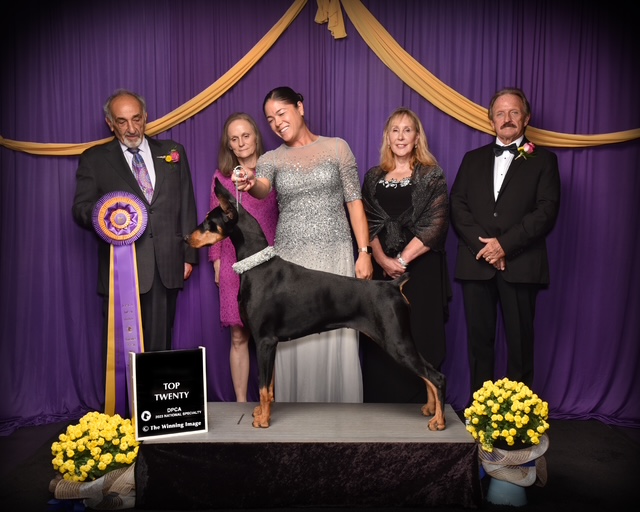
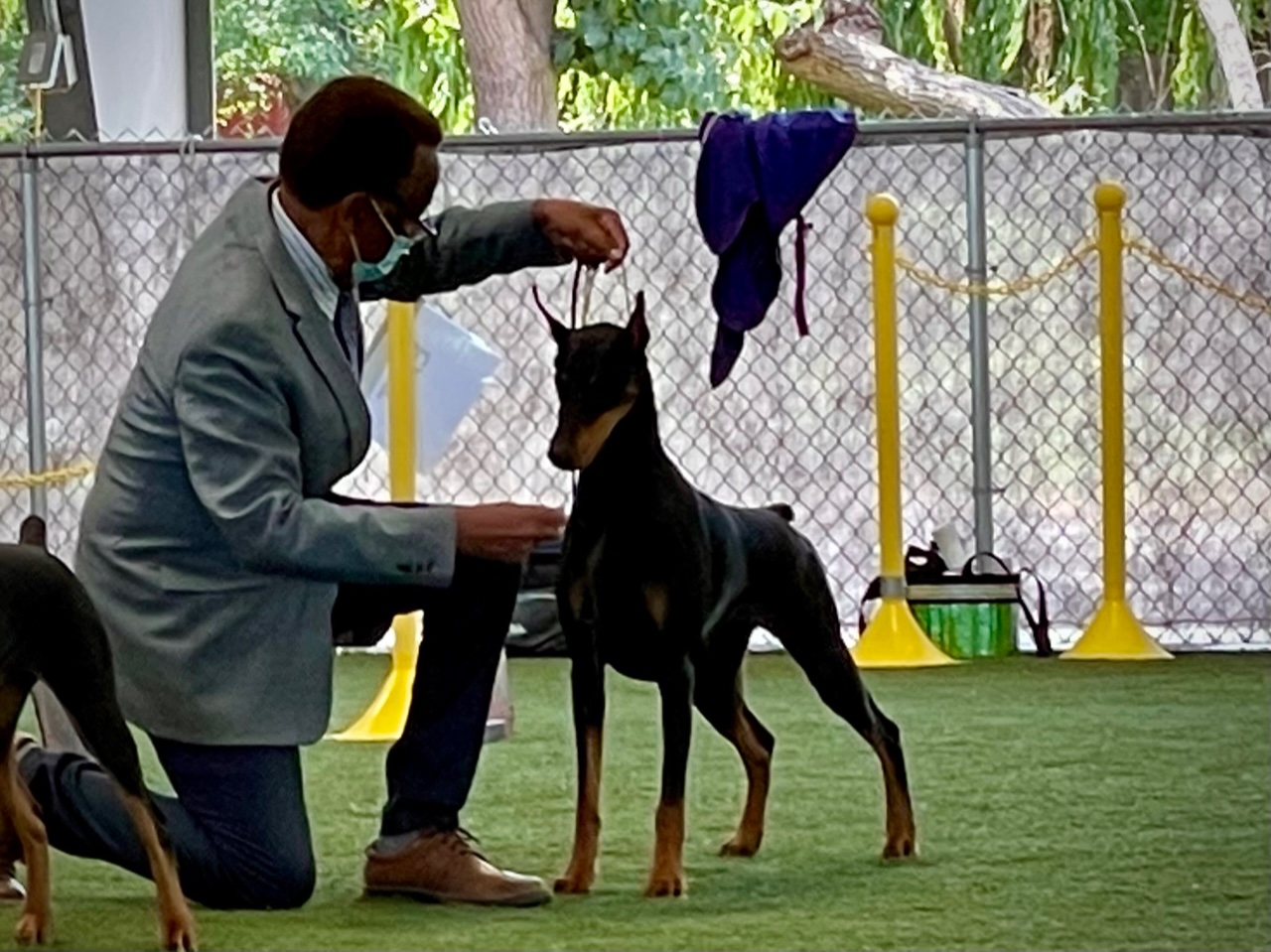
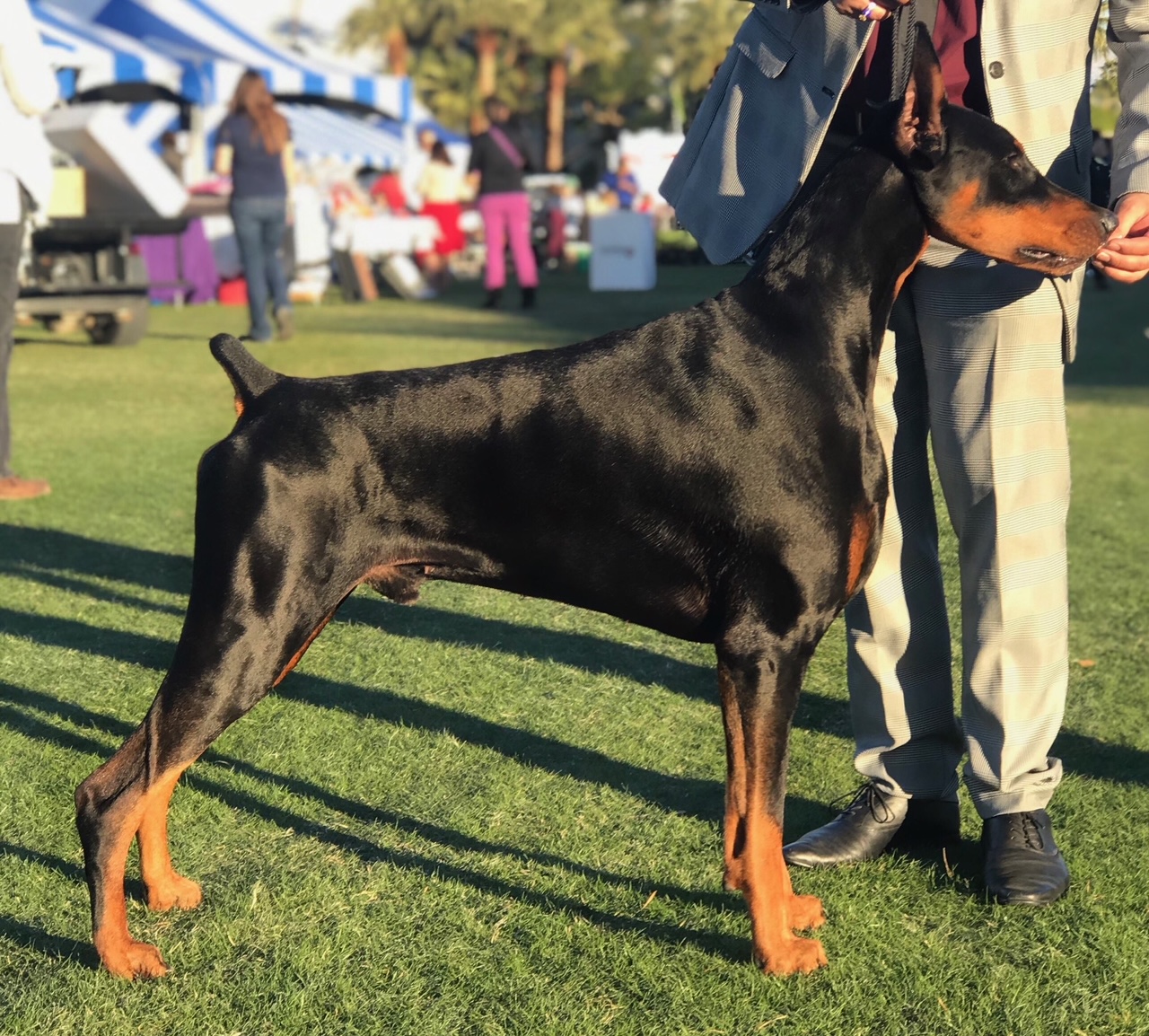
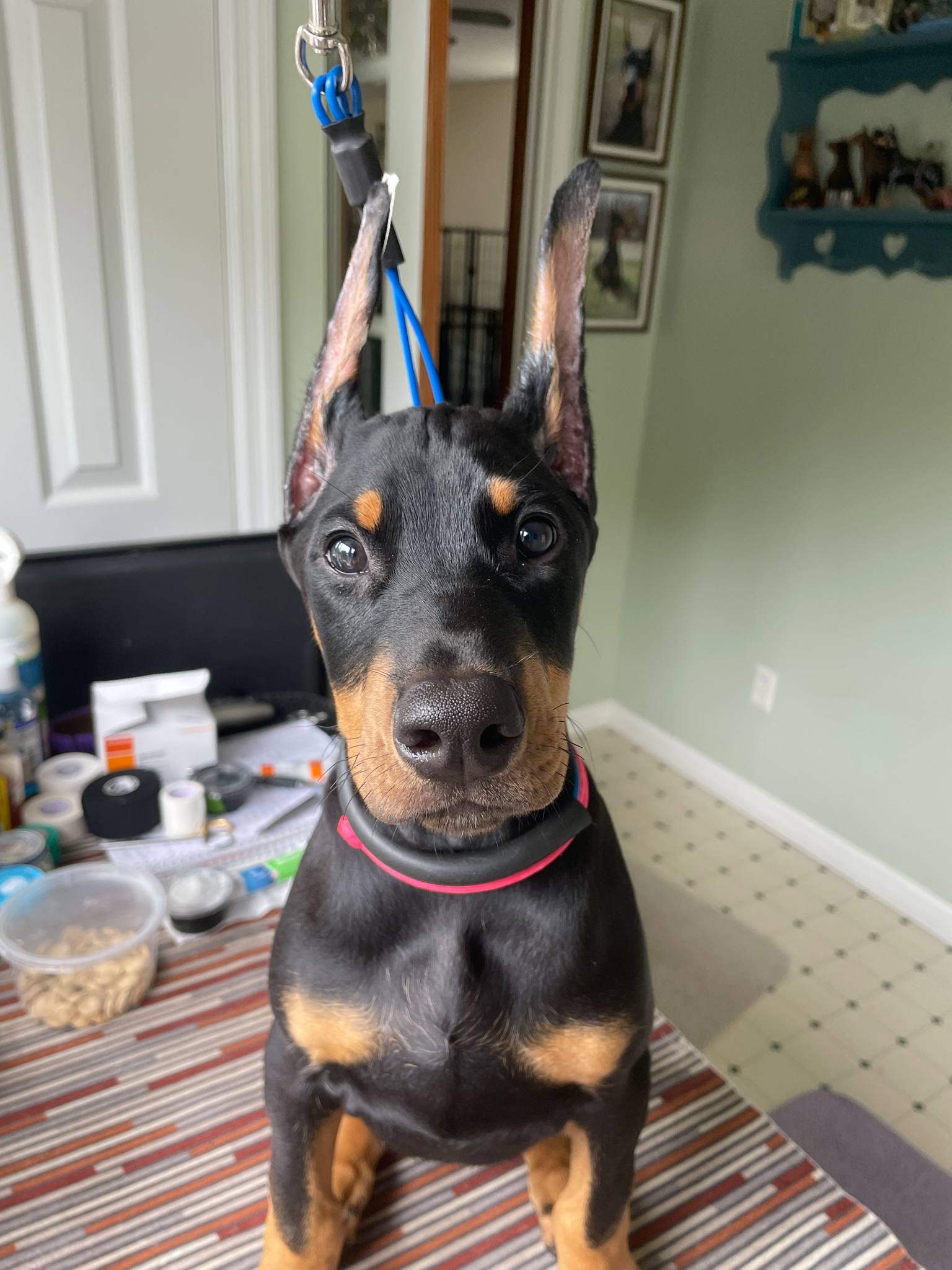
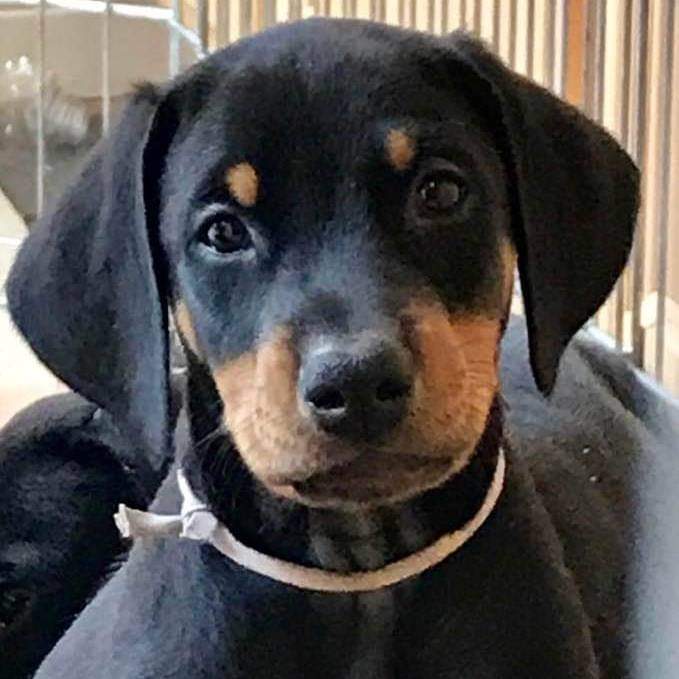
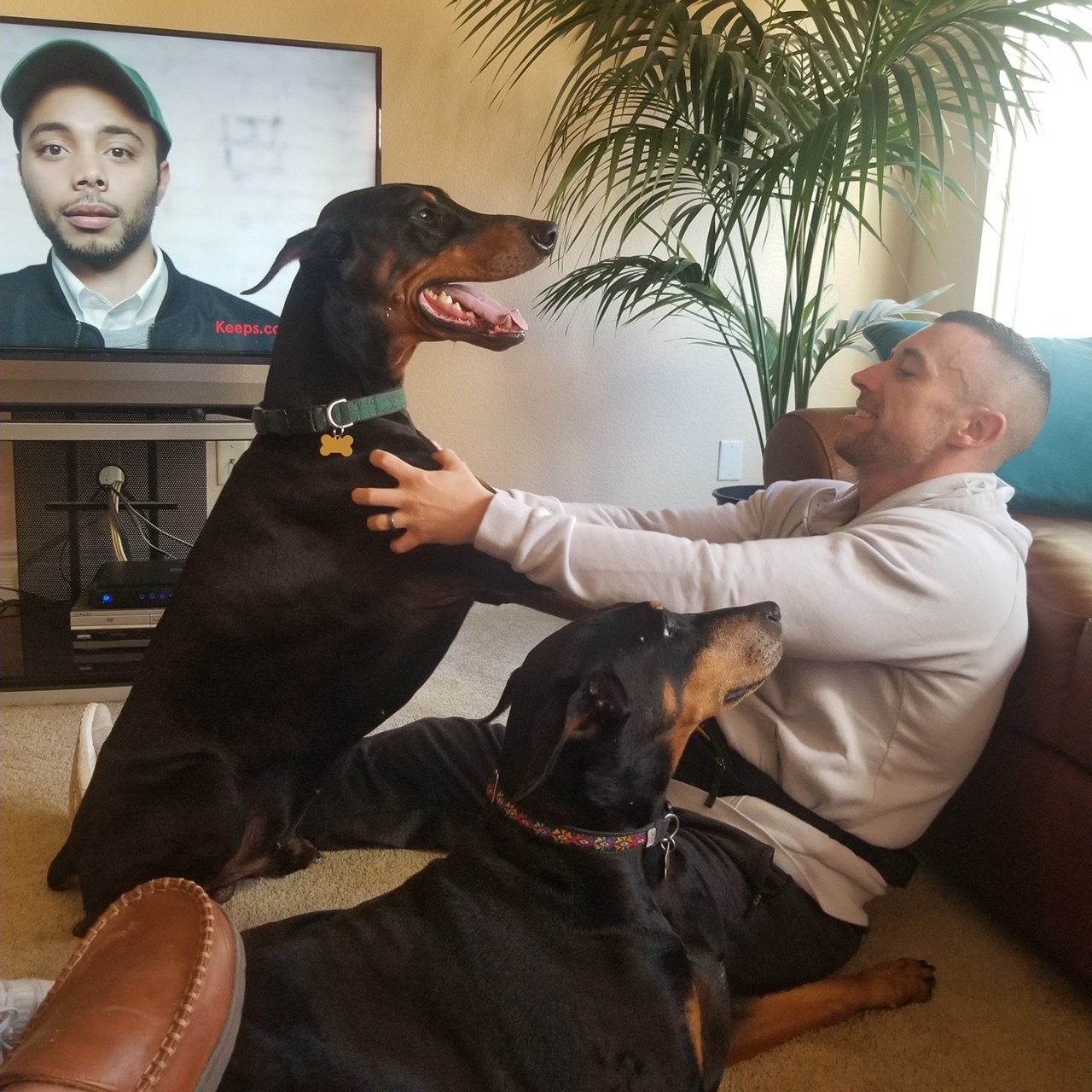
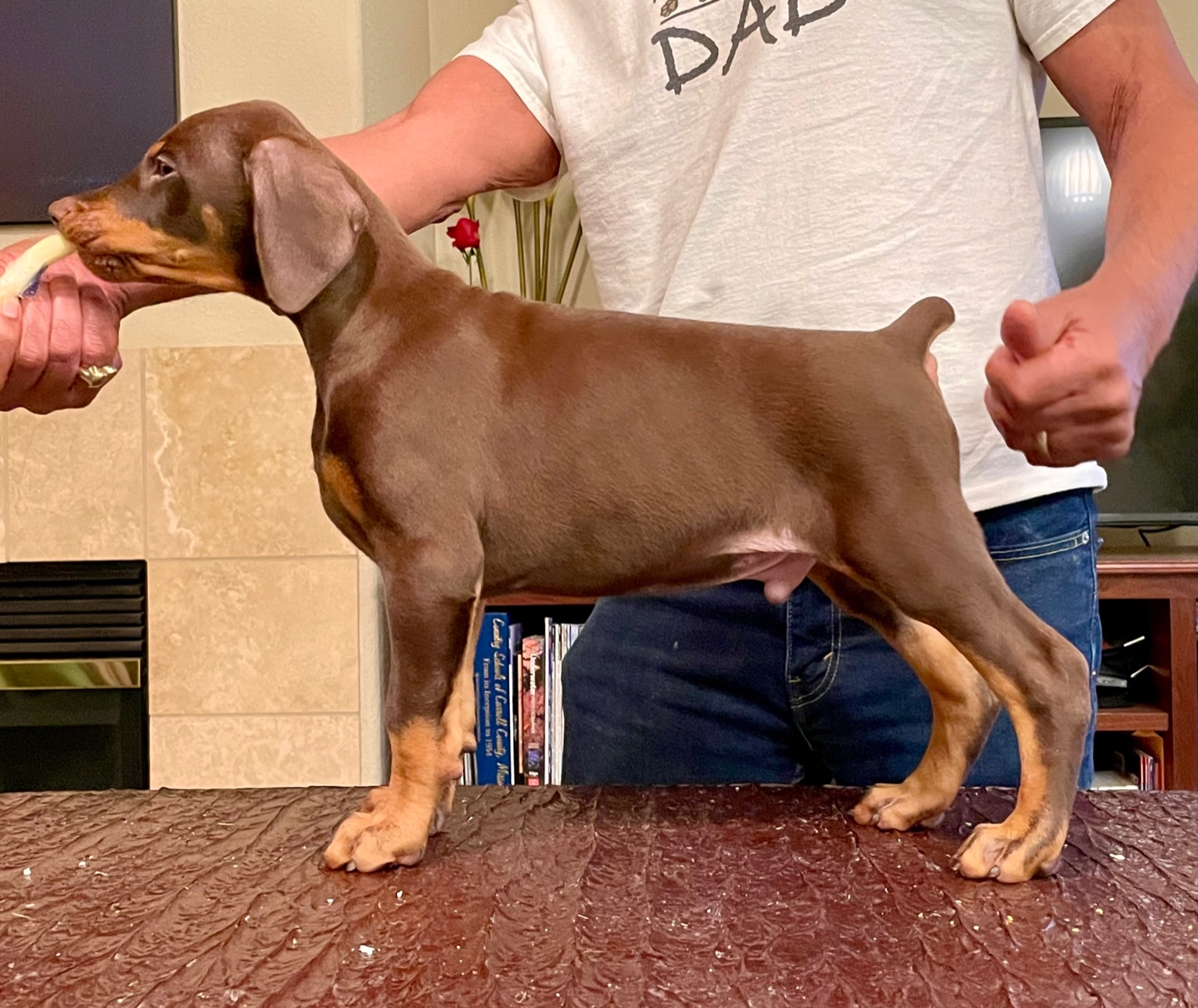
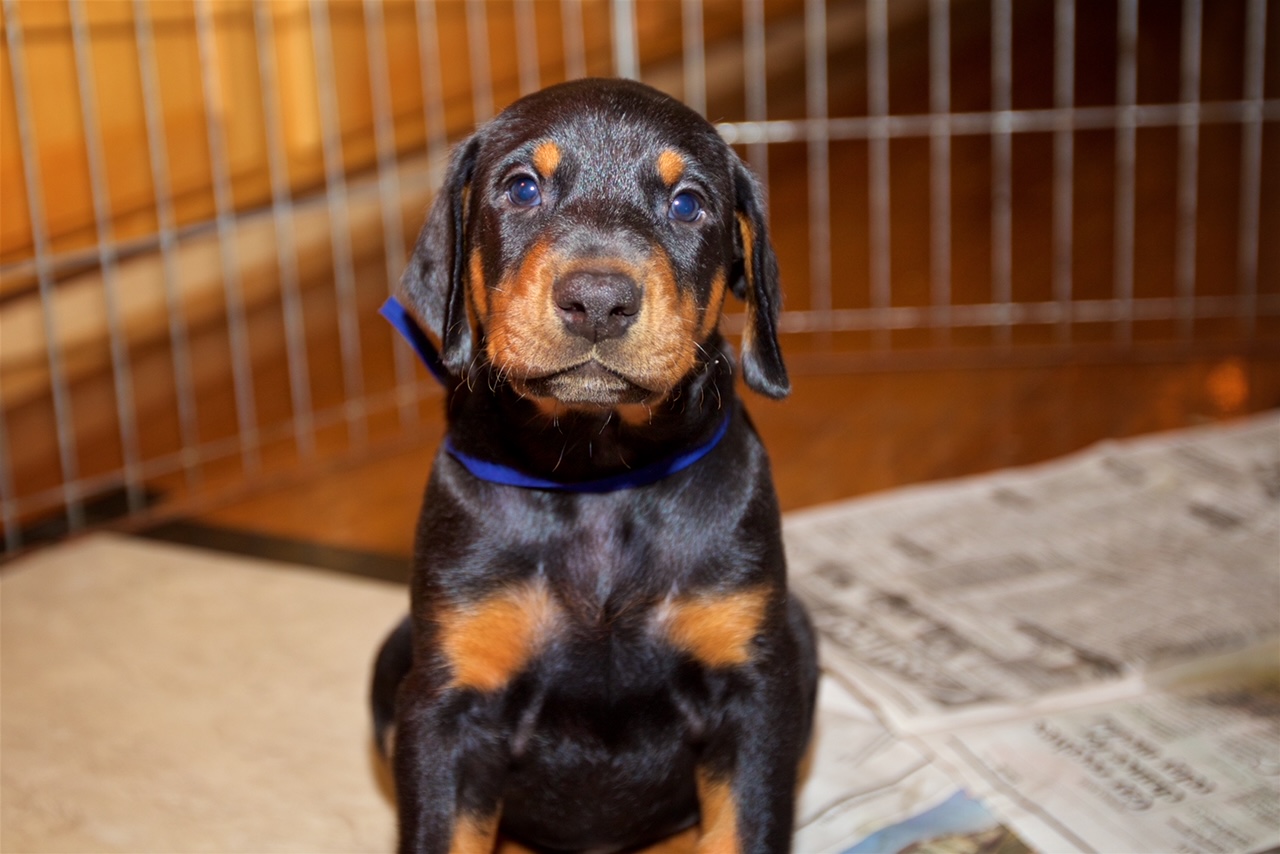
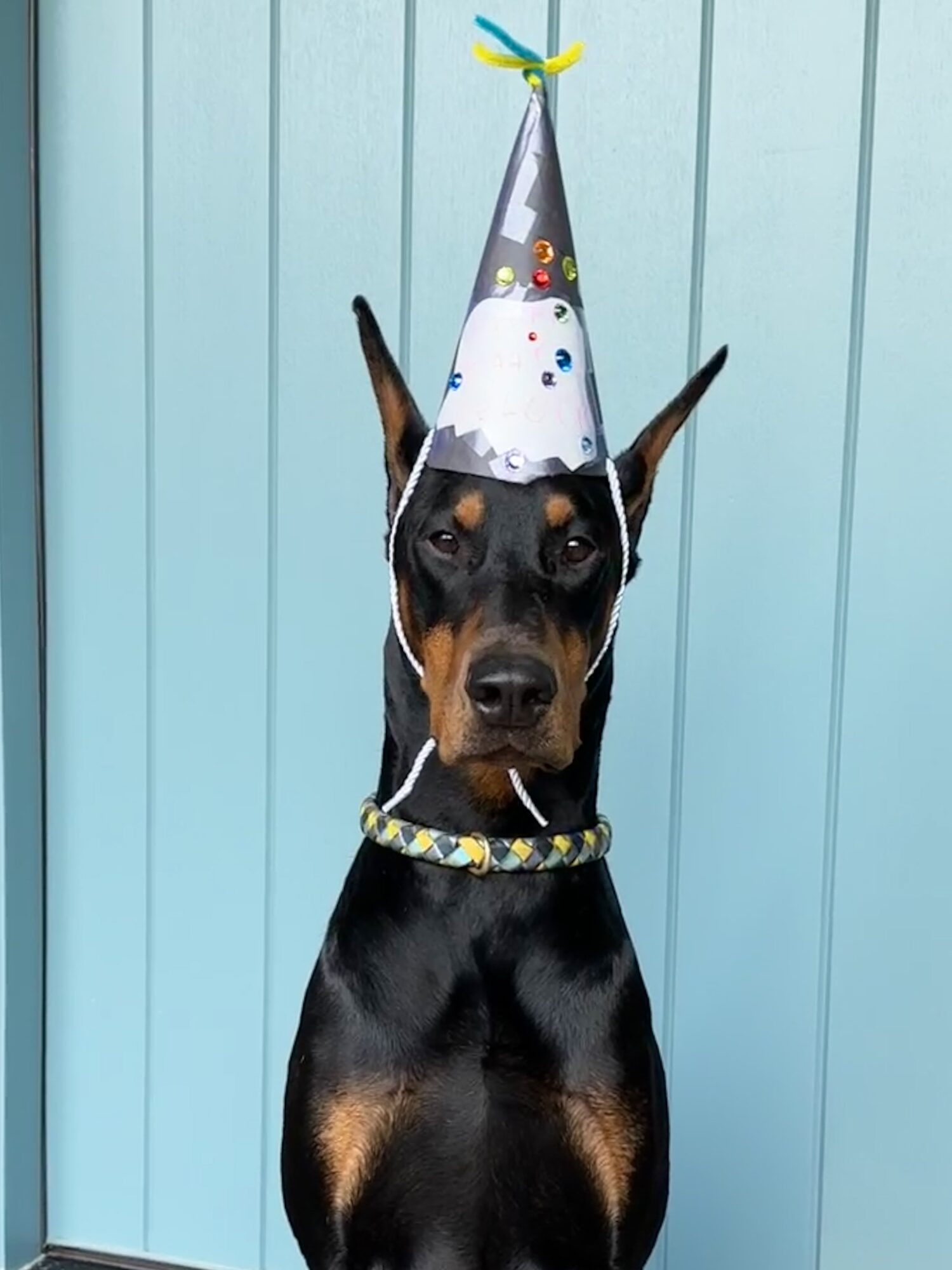
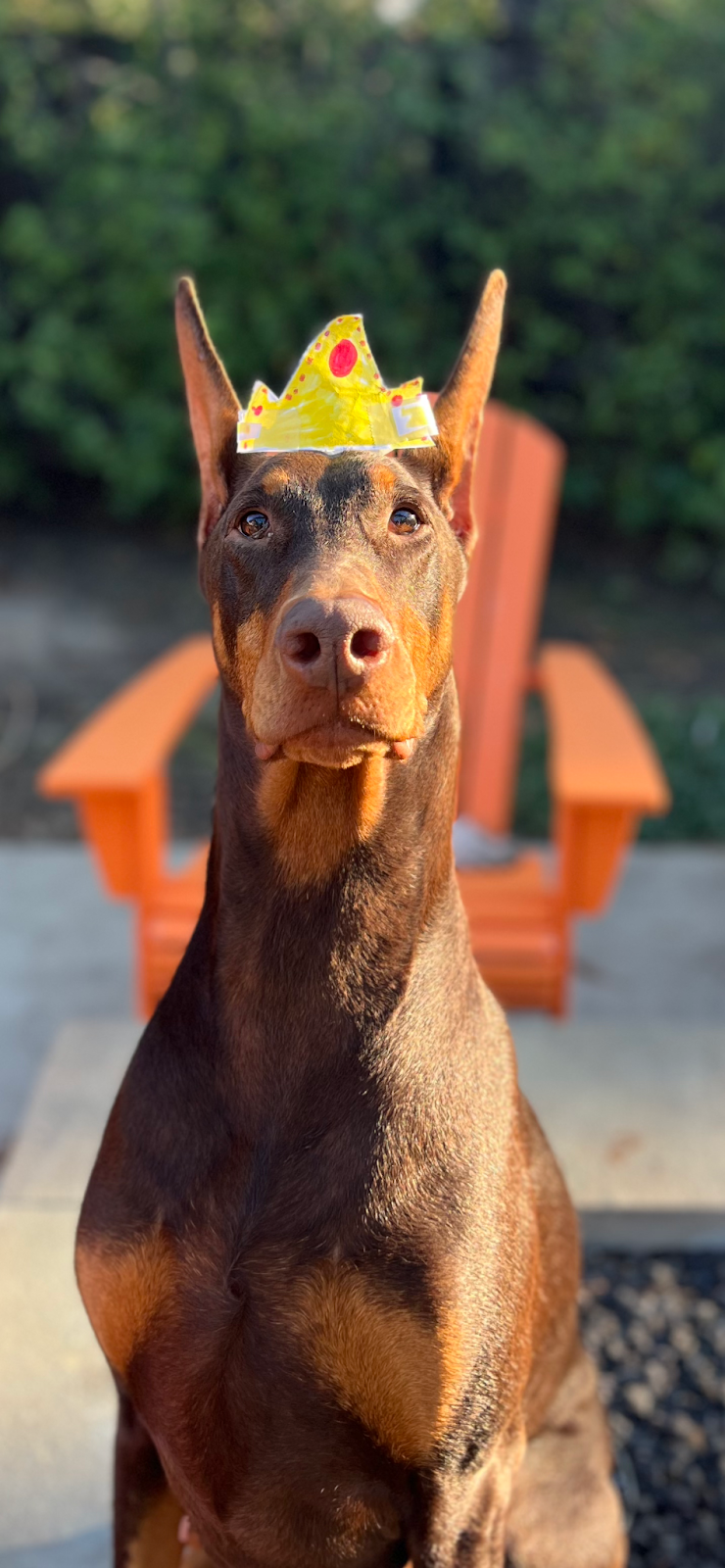
Breed Name:
Doberman PinscherPersonality:
Incredibly intuitive, sometimes mischievous, the Doberman does not suffer fools kindly, but it is the Doberman’s loyalty of heart in addition to their stylish aesthetics is what captivates their devoted owners.AKC Group:
WorkingHistory and Characteristics:
Early 1800s in Apolda, Germany, the local tax collector and local pound guy by the name of Louis Dobermann decided to create a breed of dog to accompany him on his tax collecting rounds. Dobermann needed a dog who was intelligent, loyal, and fearless: an animal who could provide the necessary reinforcement for his occupation, and could then in turn, provide protection for Dobermann himself. Dobermann’s pinschers, fearless and tenacious, quickly gained the attention of fellow dog aficionados who continued to develop the breed’s temperament and modern conformation. In German, “pinscher” means “terrier,” which these dogs are not, so in Europe, the “pinscher” part of the name has been dropped and they are simply called “Dobermanns.” In North America, they have dropped the second “n” in the original breeder’s surname.
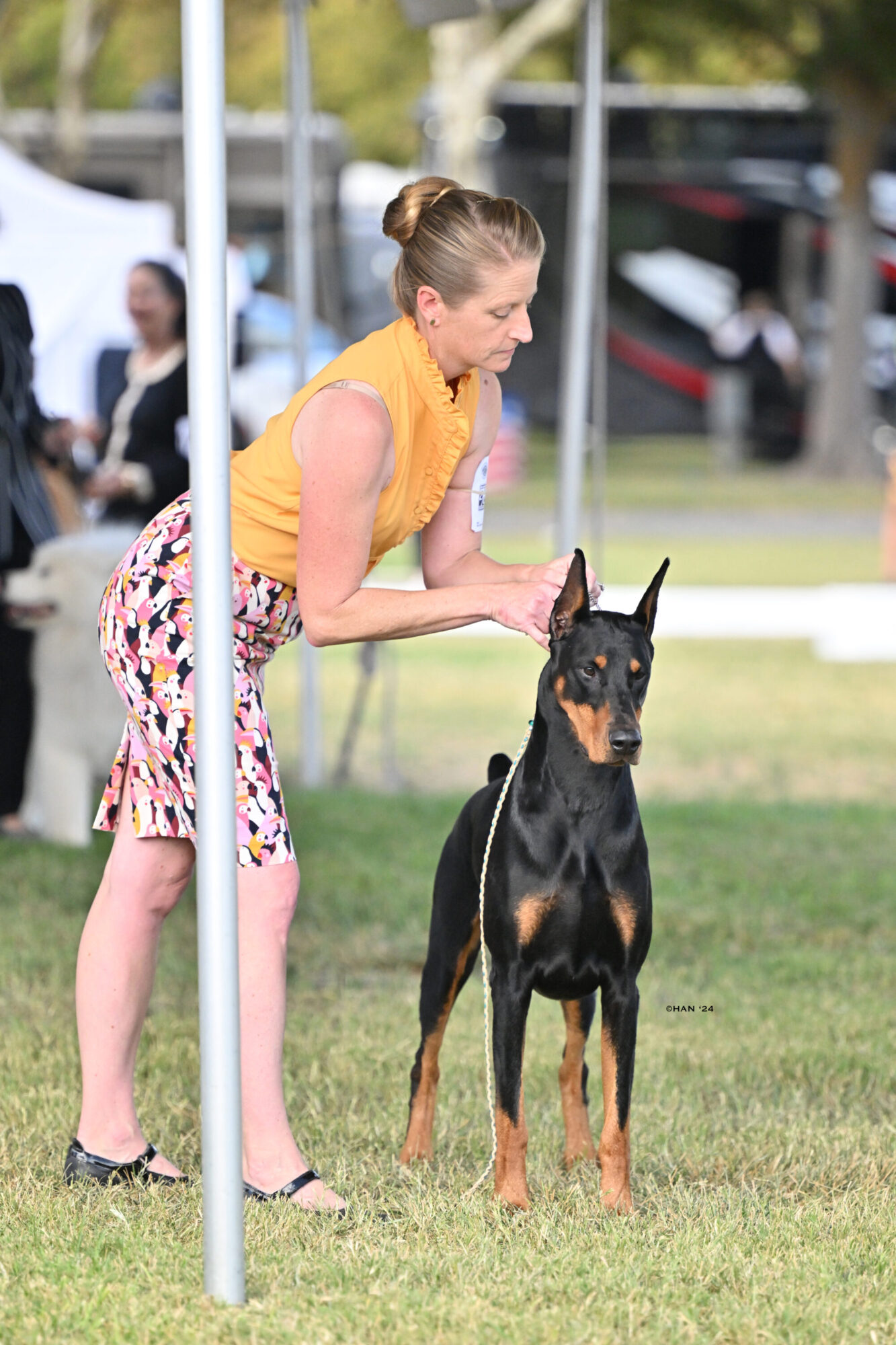
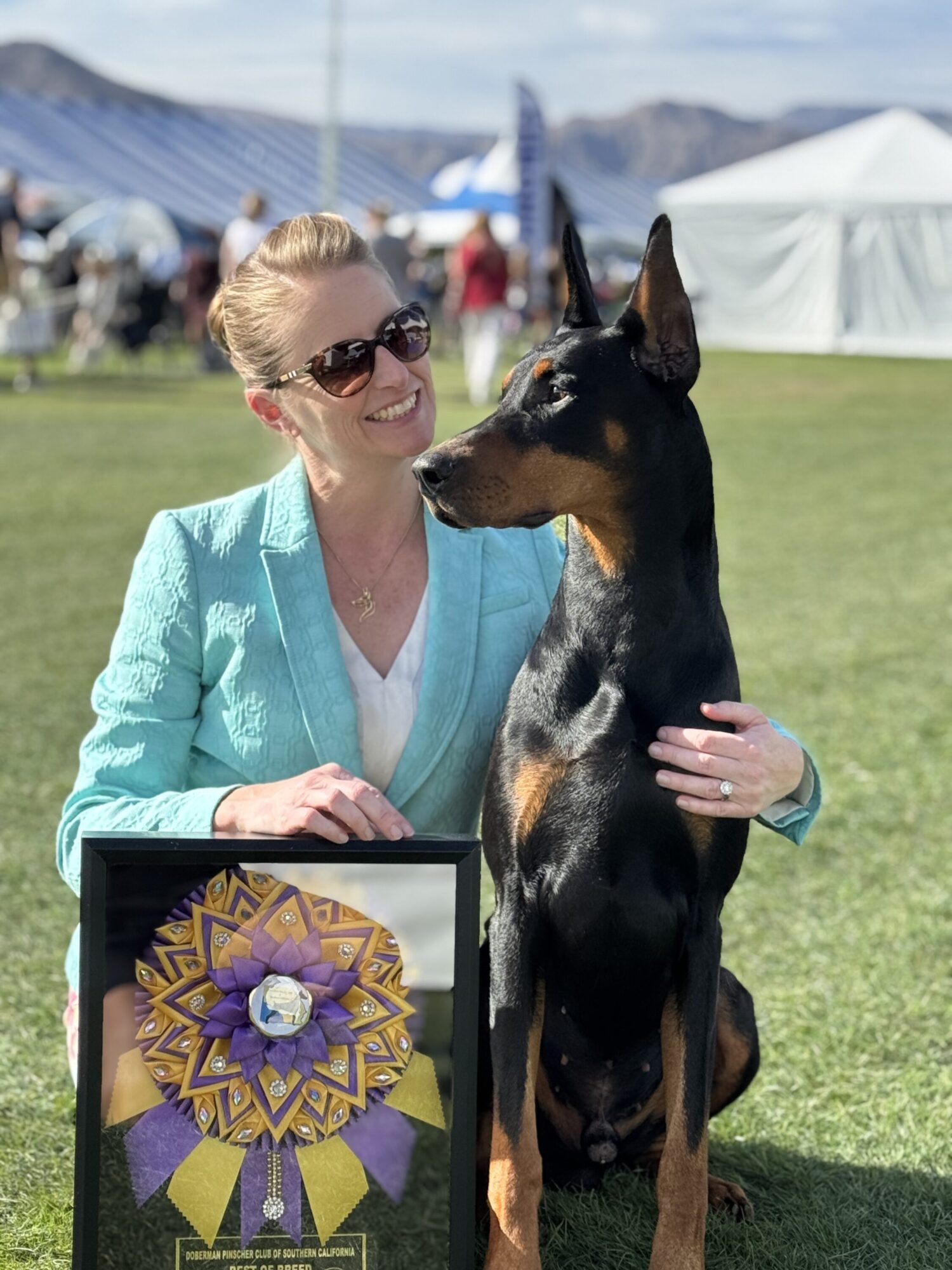
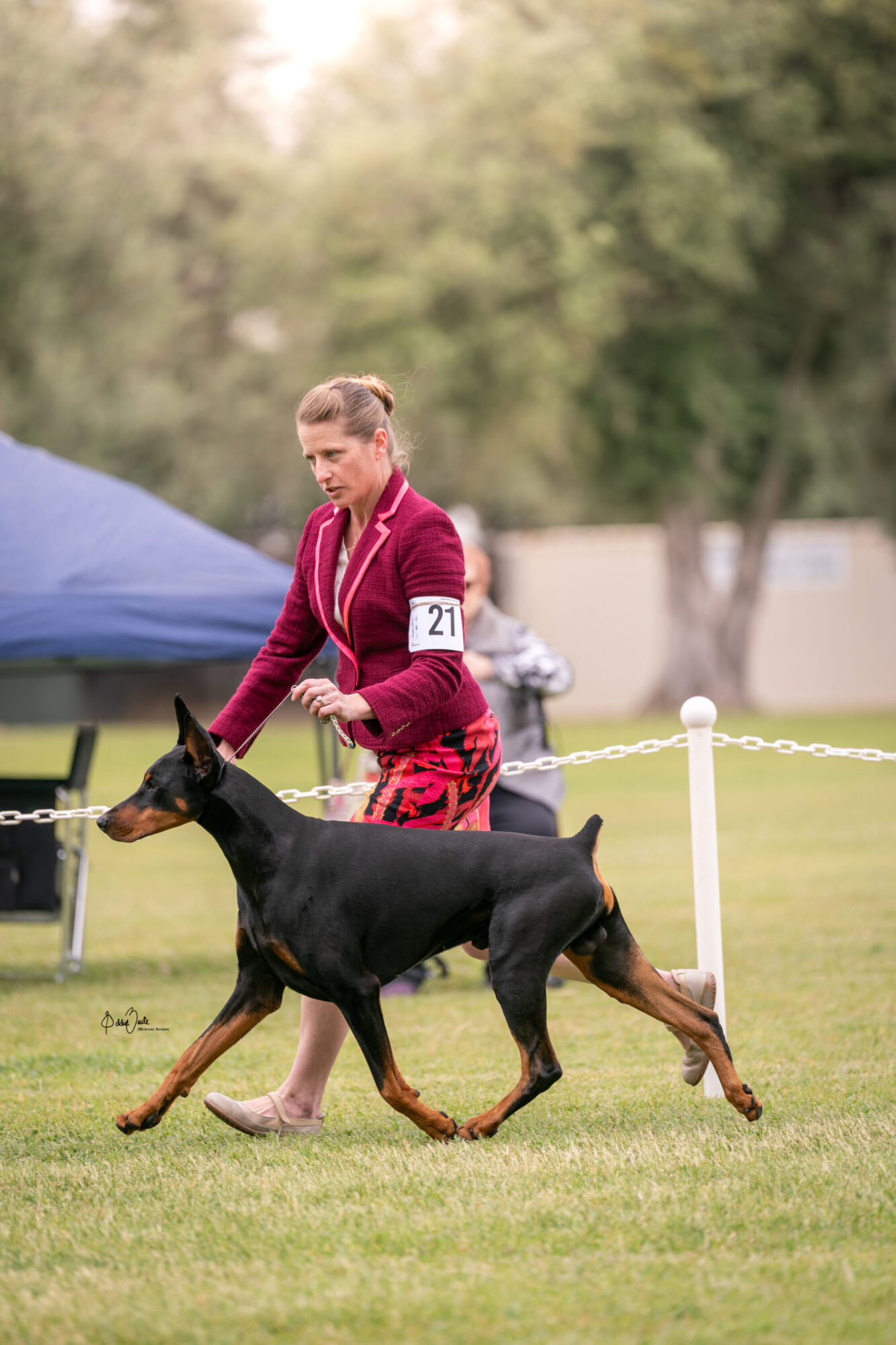
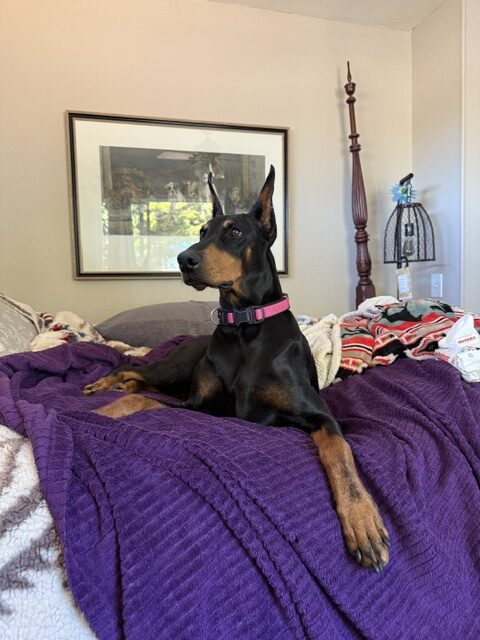
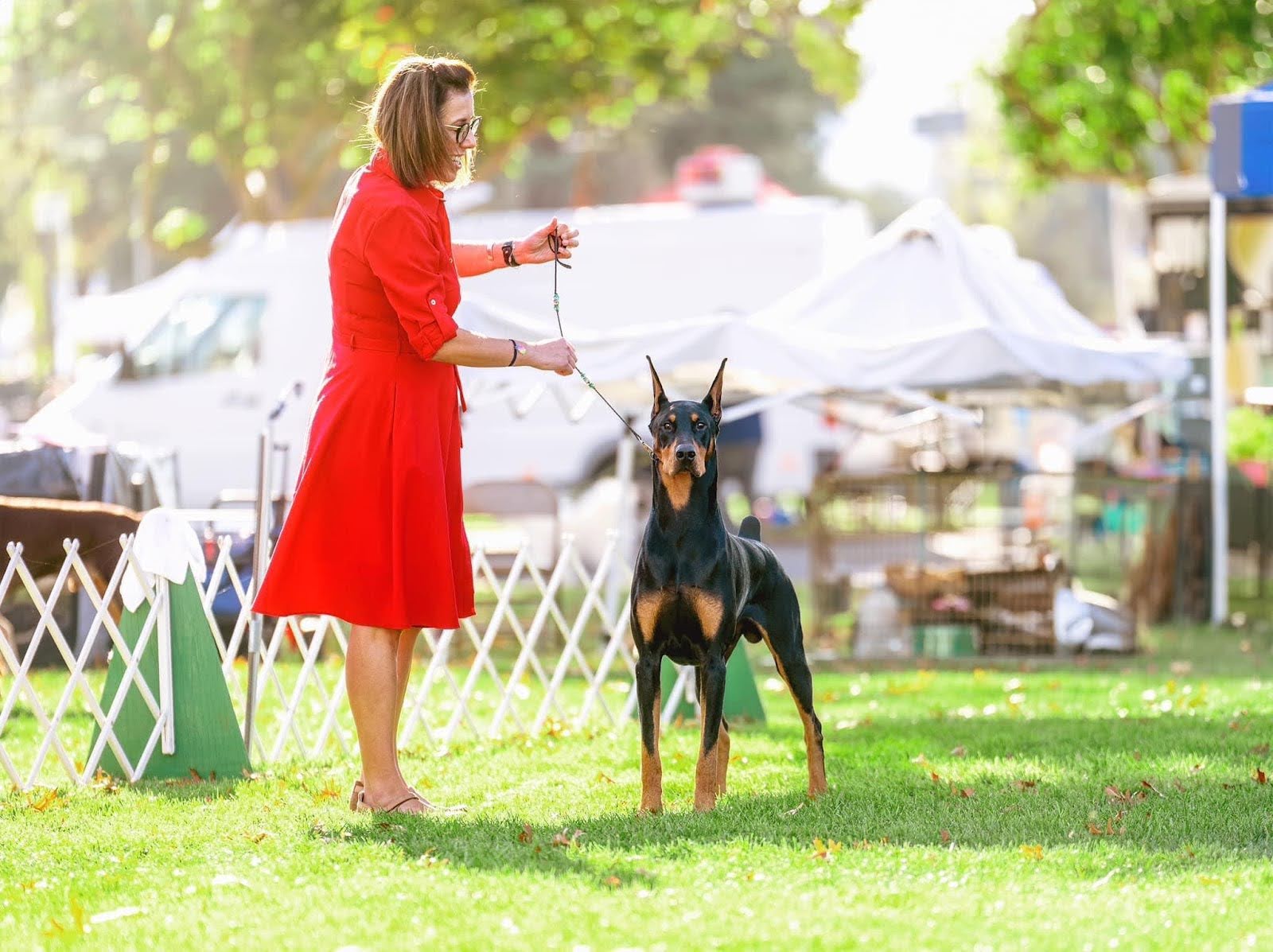
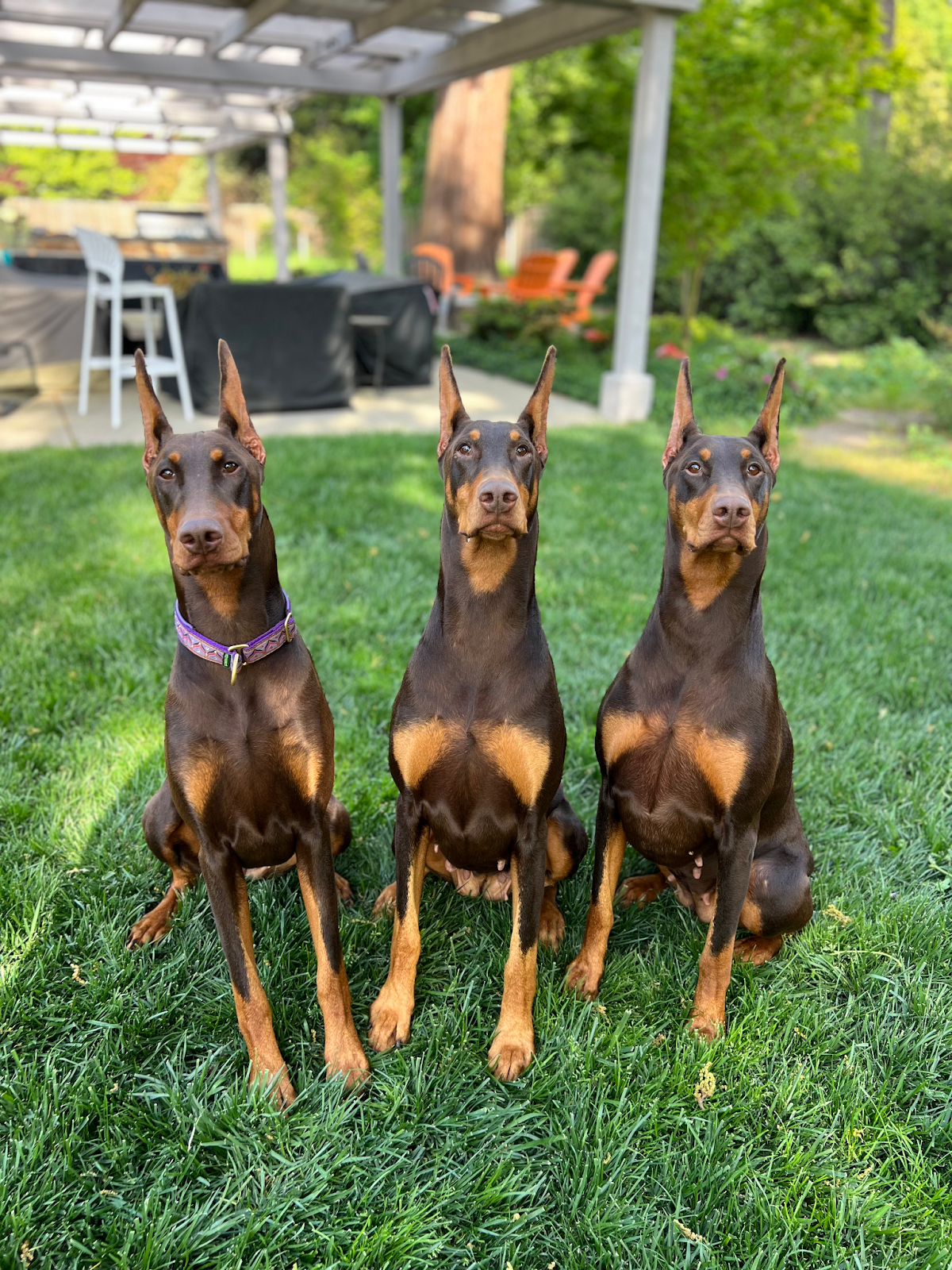
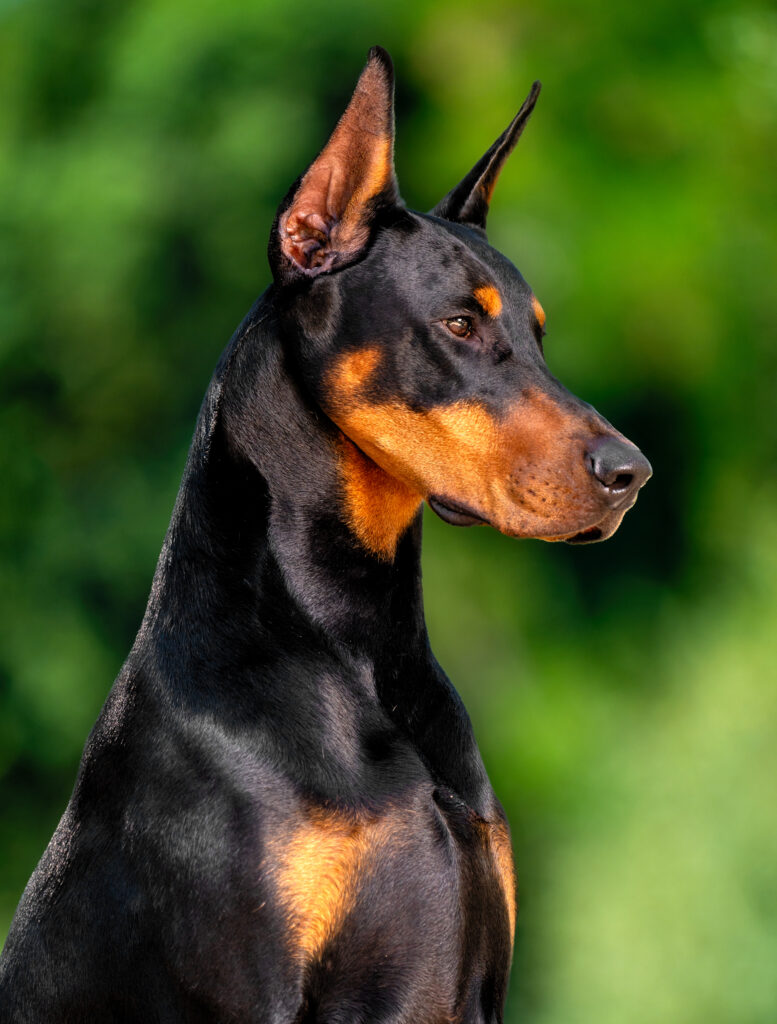
The intense look from a Doberman should make a person think twice about their next decision; after all, these are protective guard dogs! It is completely breed-appropriate for Dobermans to be aloof with strangers; they are NOT Golden Retrievers in Doberman suits. Dobermans are incredibly intelligent and bond closely with their humans. Their biddability and desire to work means they are an active breed that thrives with rules, training and exercise. They are a powerful, imposing dog designed for its job, sinewy, athletic, and commanding, but their nobility and elegance are undeniable.
Fun Fact About Doberman Pinschers
How Popular Are Doberman Pinschers?
Service to Humans:
While other breeds were designed to guard property and livestock, Dobermans are the only breed in the world that was developed exclusively to protect its humans, specifically to accompany their namesake on his tax-collecting rounds. Because the breed has to work closely with its handler, it is imperative the dog be intensely loyal, intelligent, and be able to read the room and react appropriately. As such, Dobermans have historically served in the military, police, and of course as loyal guardians for their families.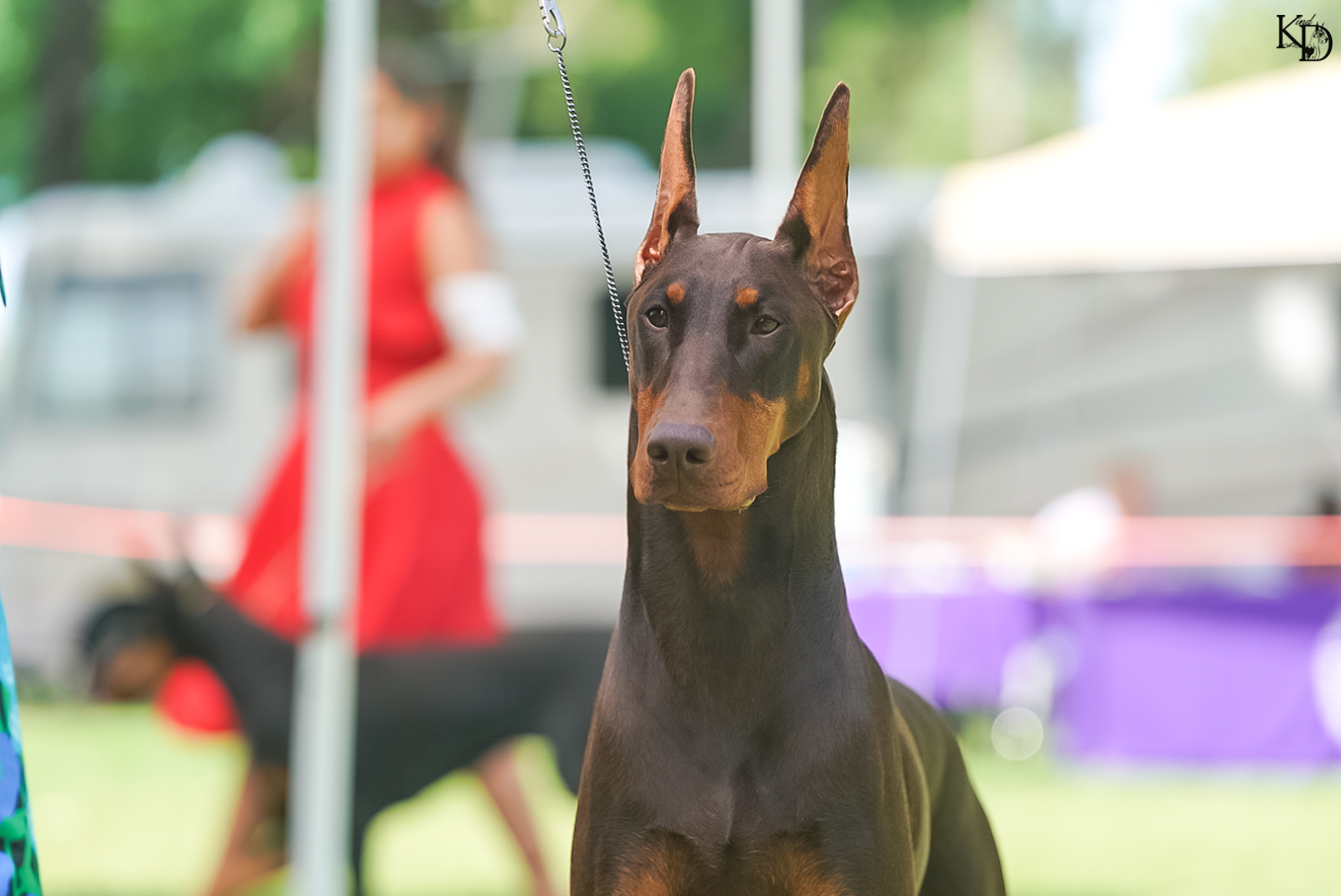
Prominent Canines
Famous Doberman Pinschers:
Many celebrities own Doberman Pinschers, including...- Sylvester Stallone with “Caitano” and “Ace”
- Tom Brady with “Rudy”
- Bela Lagusi (original “Dracula” actor) with “Hector” and “Pluto”
- Ryan Gosling and Eva Mendes with “Lucho”
- Mariah Carey with “Princess” and “Duke” (Mariah, if you’re reading this, you were Dr. Christensen’s teenage crush and he would love to take you out for dinner sometime…)
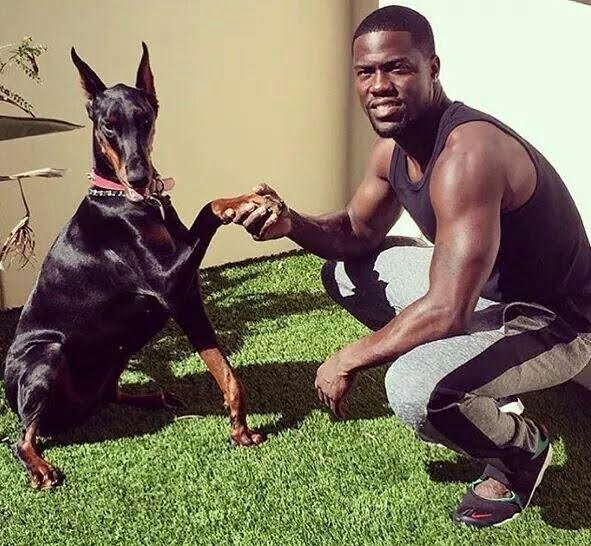
- Kevin Hart with “Roxy,” “Rosco,” and “Riggs”
- Victoria Principal (“Pamela Barnes Ewing” from Dallas) with “China” and “Dyla”
- Tanya Roberts (“Julie Rogers” from Charlie’s Angels and “Midge” from That 70’s Show) with “Jennifer,” “Emma,” and “Albert.”
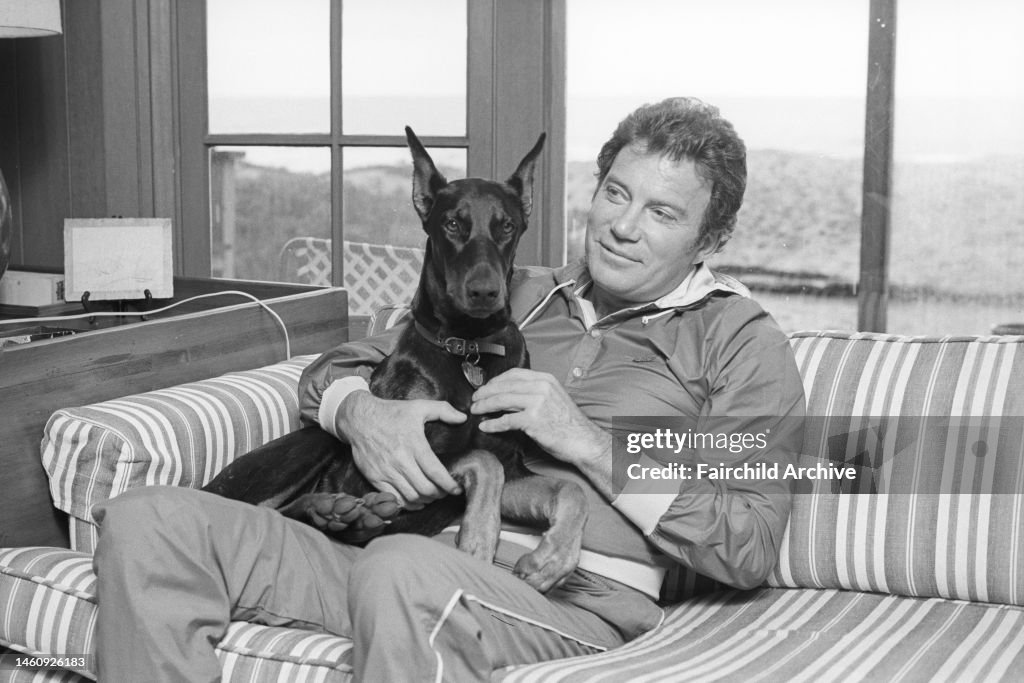
- William Shatner is perhaps the celebrity king of Dobermans as he has owned several over the years: Kirk, Morgan, China, Heidi, Paris, Royale, Martika, Sterling, Charity, Bella, and Starbuck
- Aside from multiple cameos in movies and television shows such as Father of the Bride, Resident Evil, Walking Dead, and Magnum P.I., Dobermans have also garnered more camera time in The Doberman Gang, and They Only Kill their Masters.
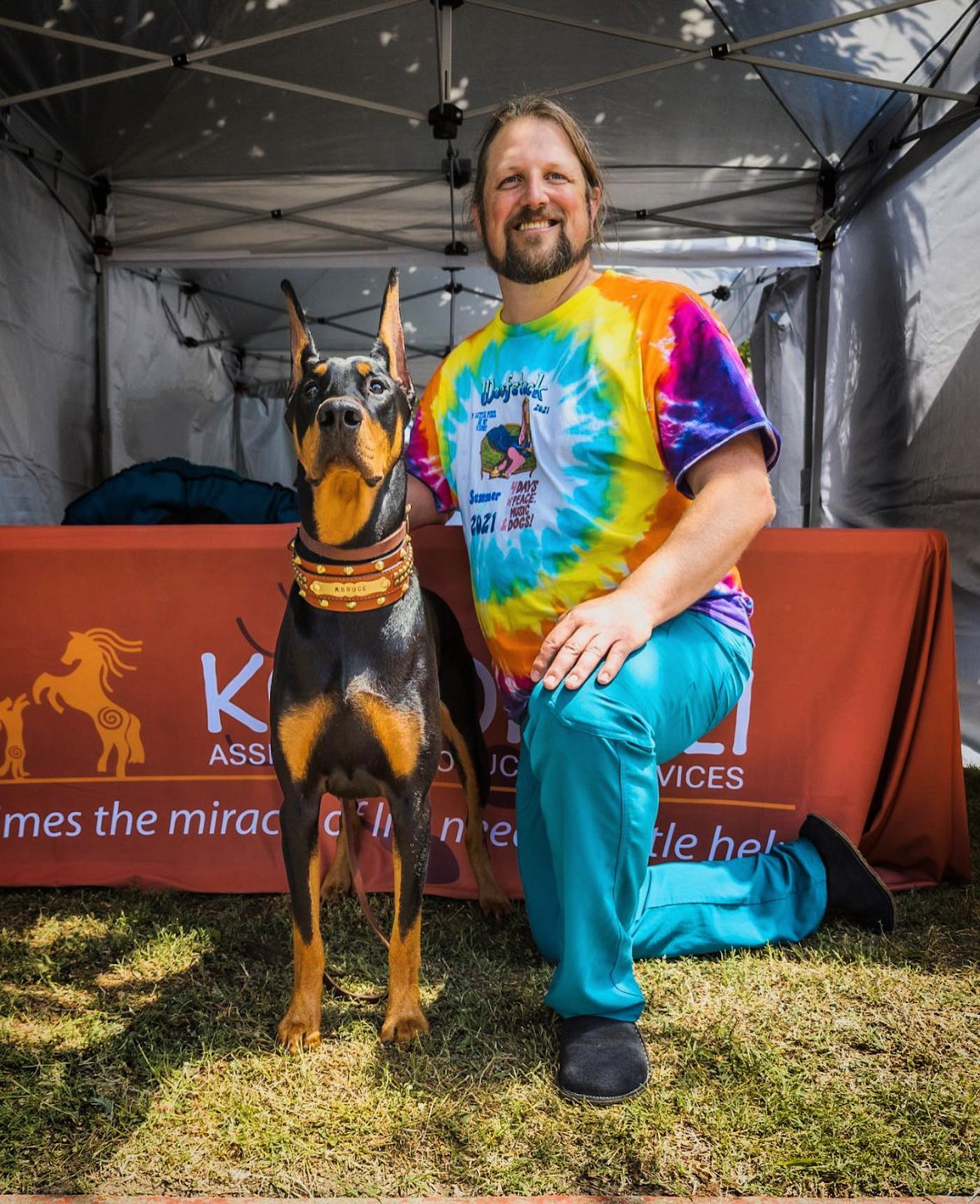
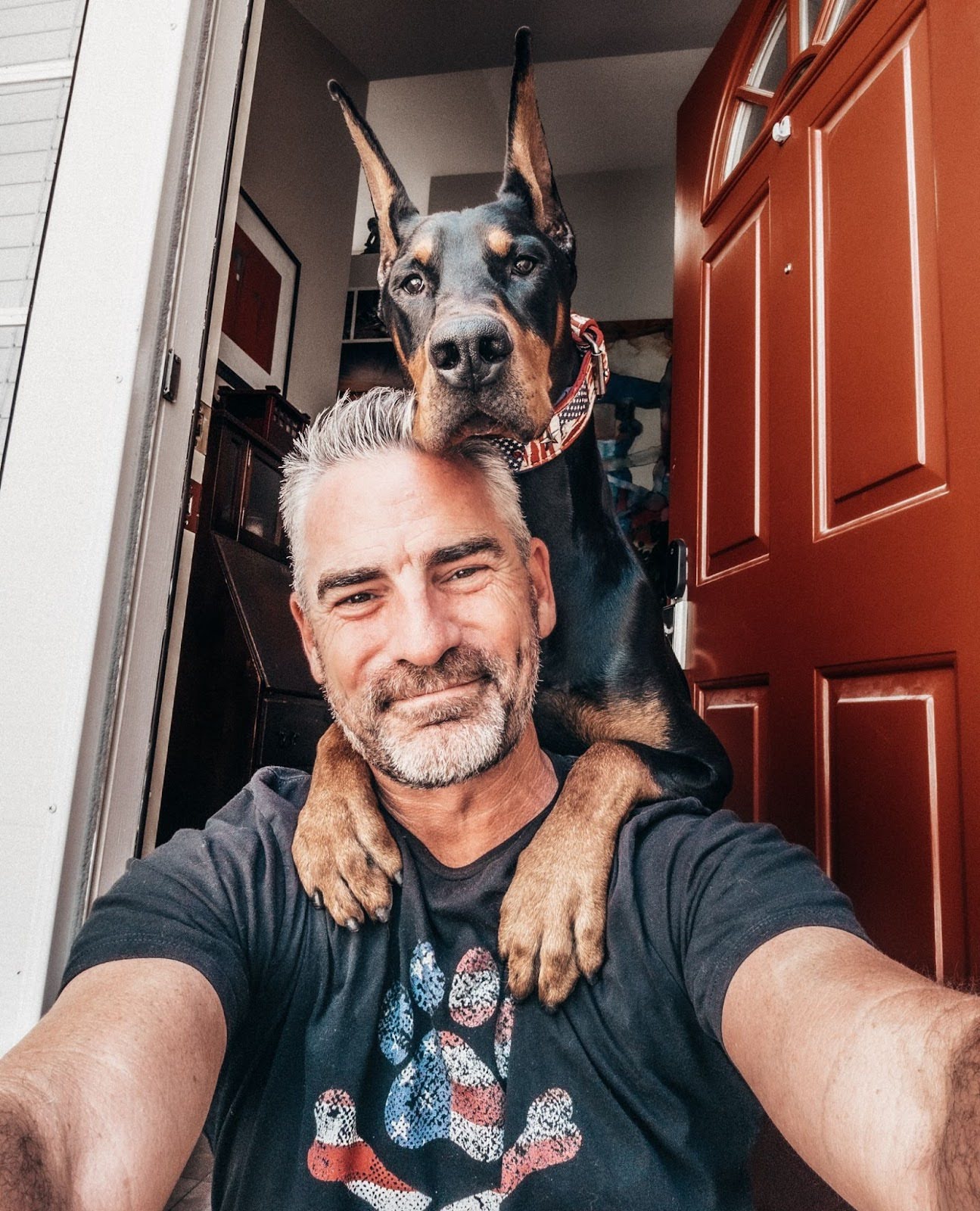
- In recent years, Dobermans have captivated social media with millions of people falling in love with social media darling, Rooby Dooby Do and her companion Doberman, Bruce (named after our own Dr. Christensen!)
Kevin Hart and Roxy
Notable Champions:
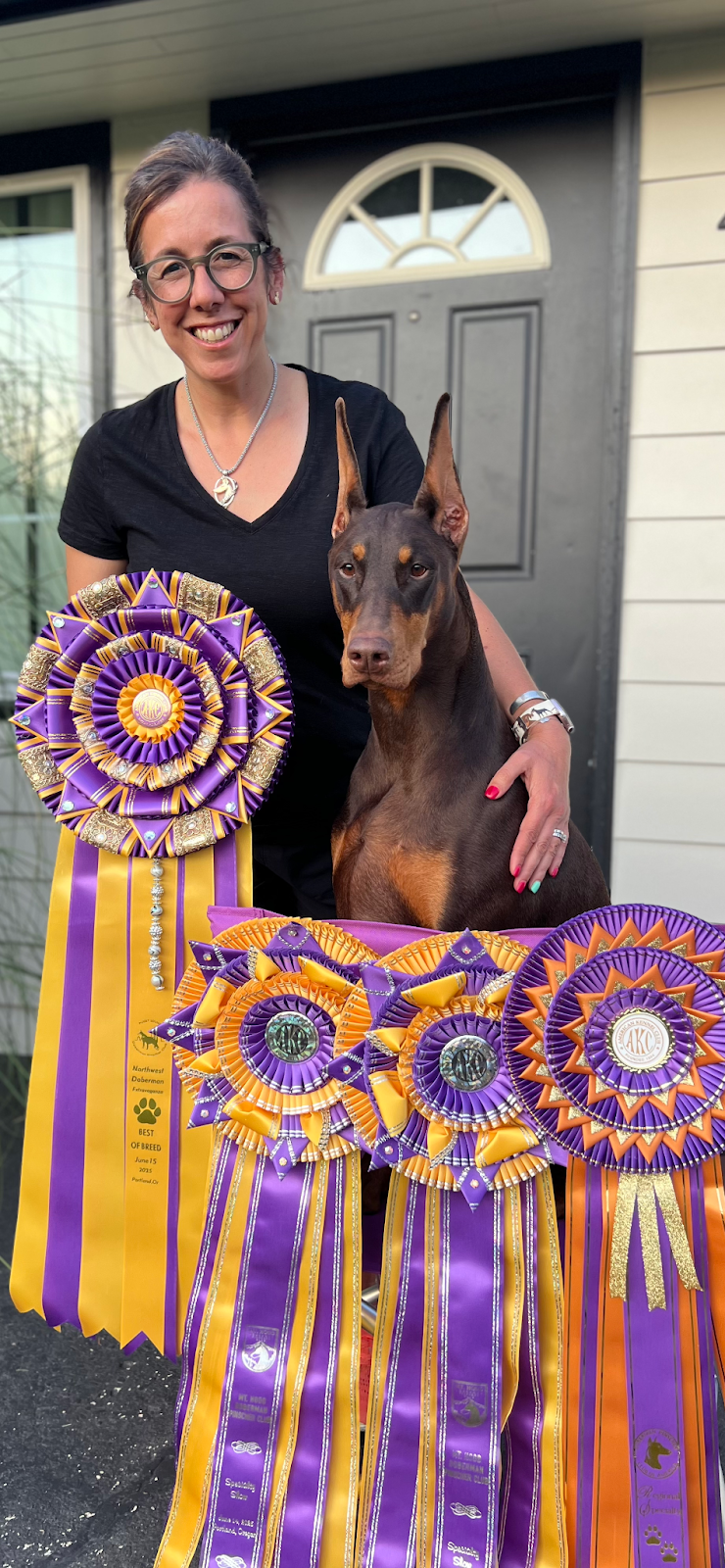
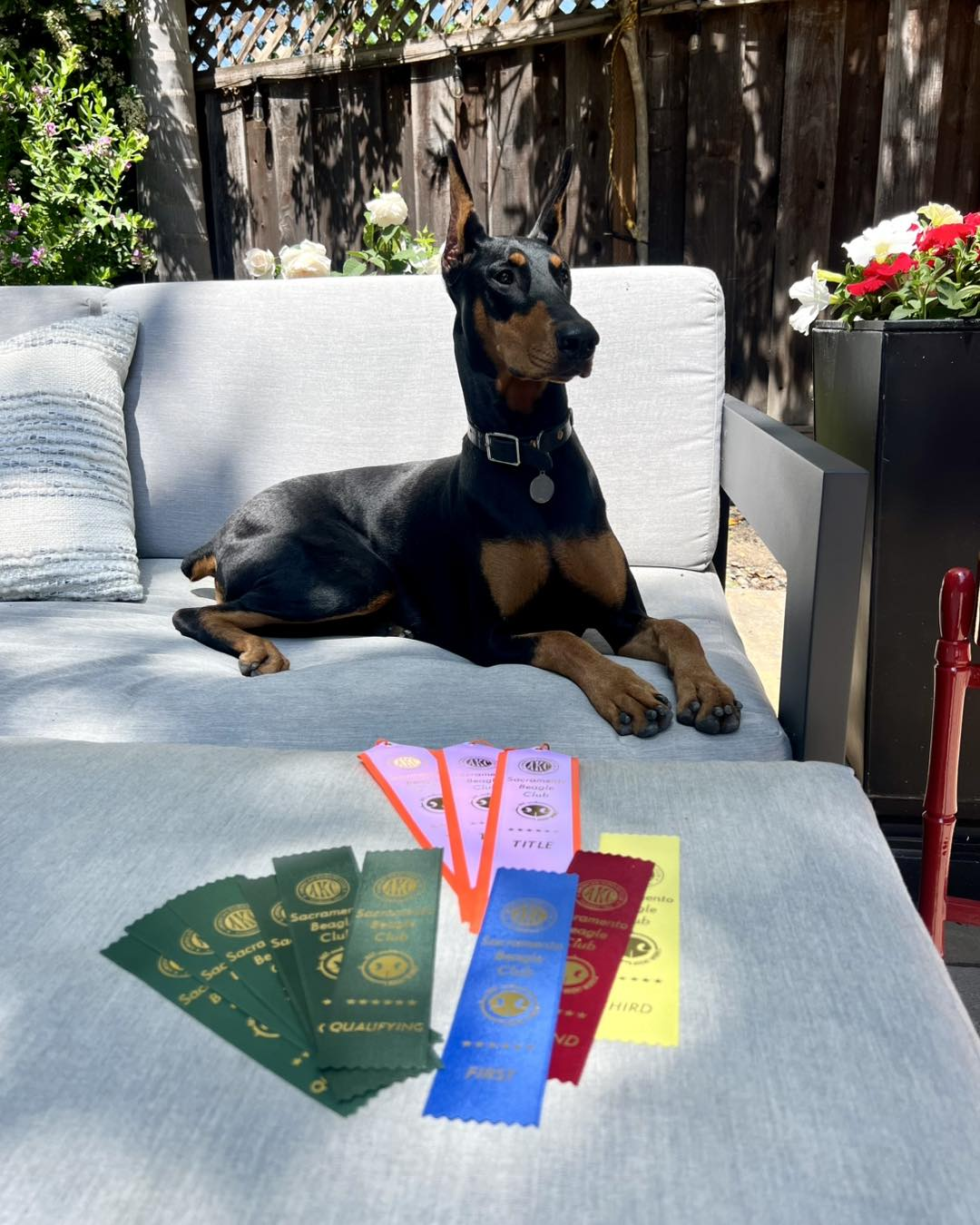
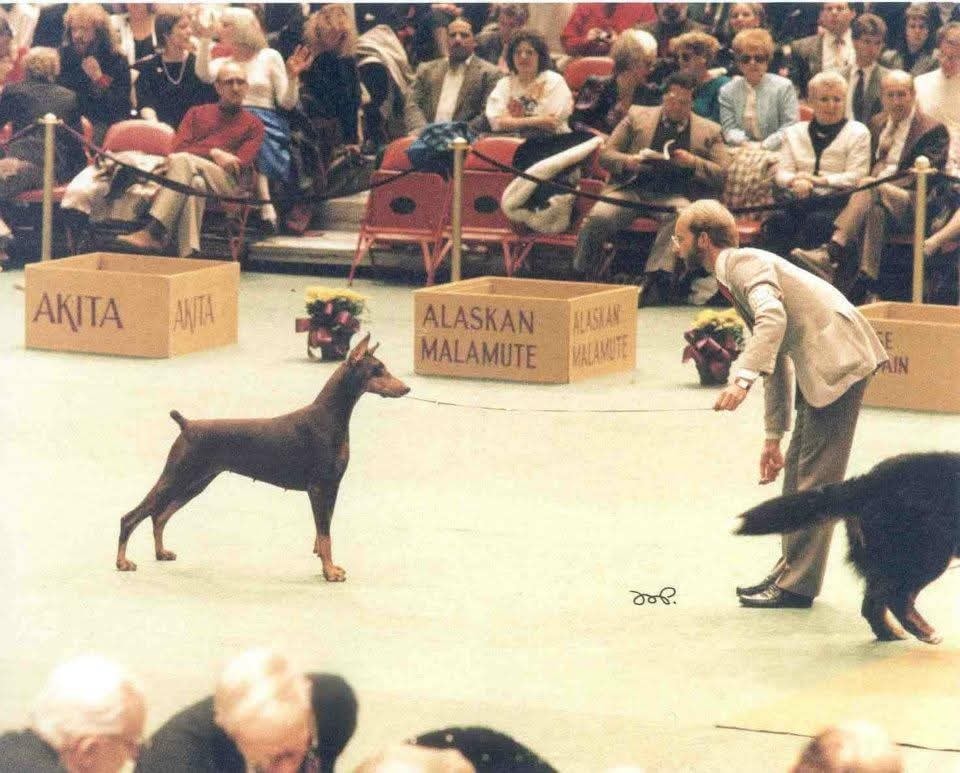
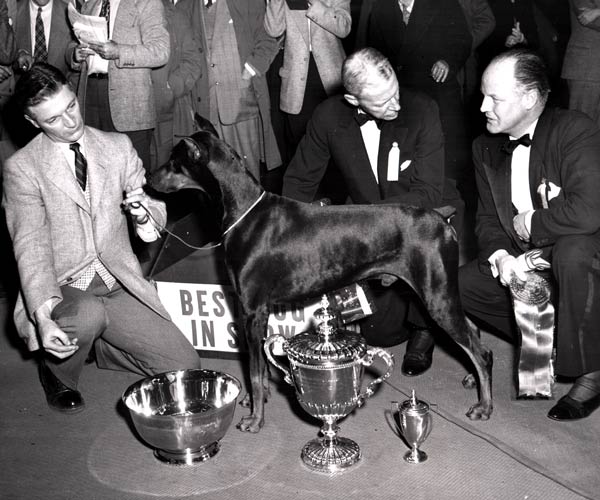
- CH Rancho Dobe's Storm won back-to-back Best in Shows at Westminster Kennel Club.
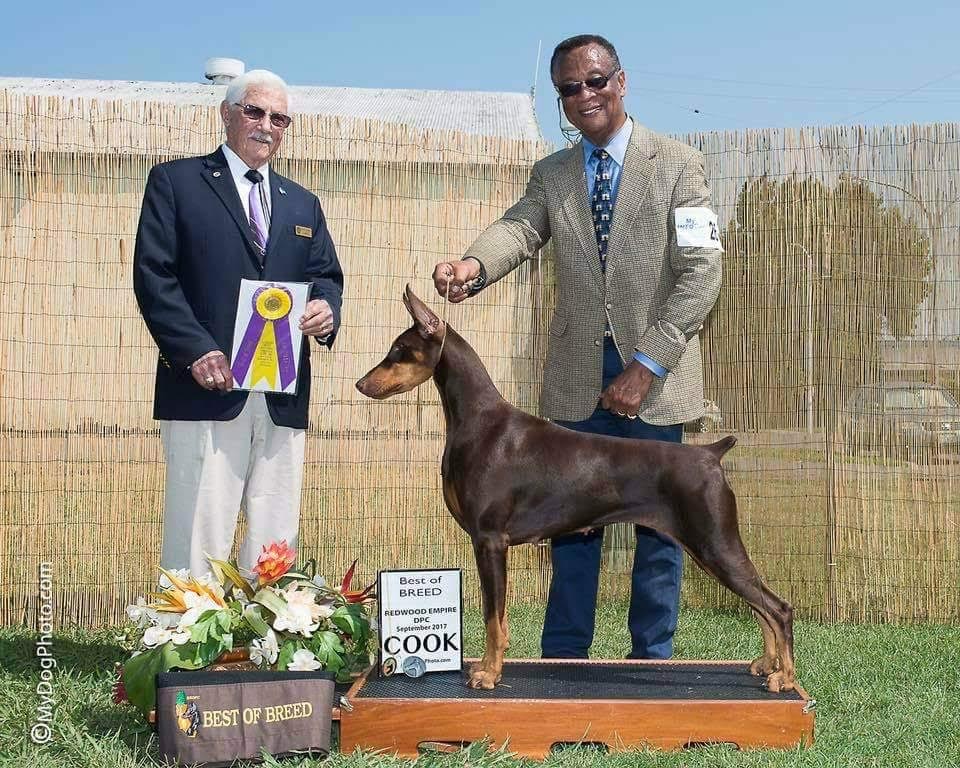
- CH Royal Tudor’s Wild as the Wind, “Indy”, CD won Best in Show at Westminster and remains the only dog to do so with an obedience title.
- “Fifi”, GCH Protocol’s Veni Vidi Vici won the National Specialty a record four times, and garnered her followers as “Fifians”.

Breeder Insights
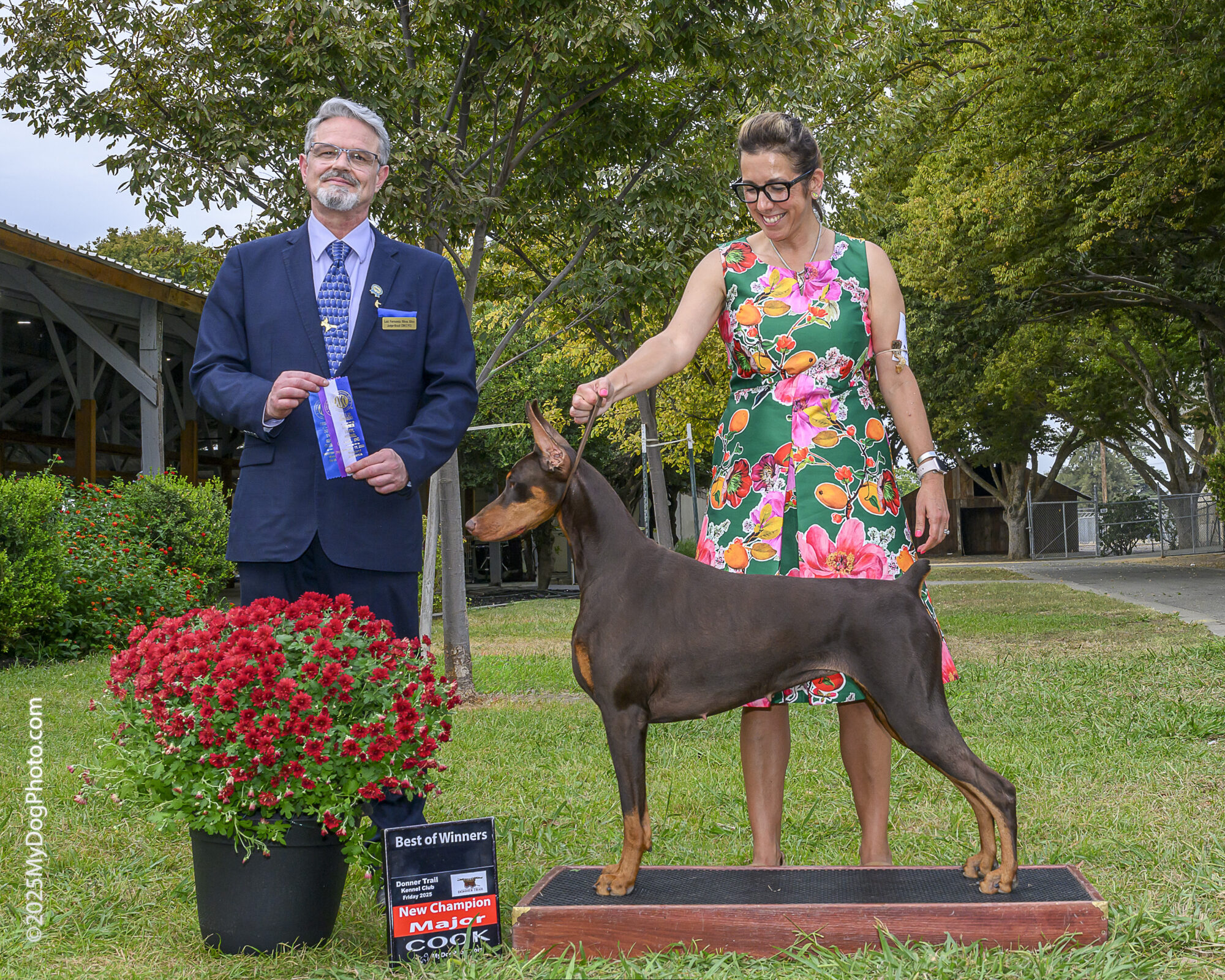
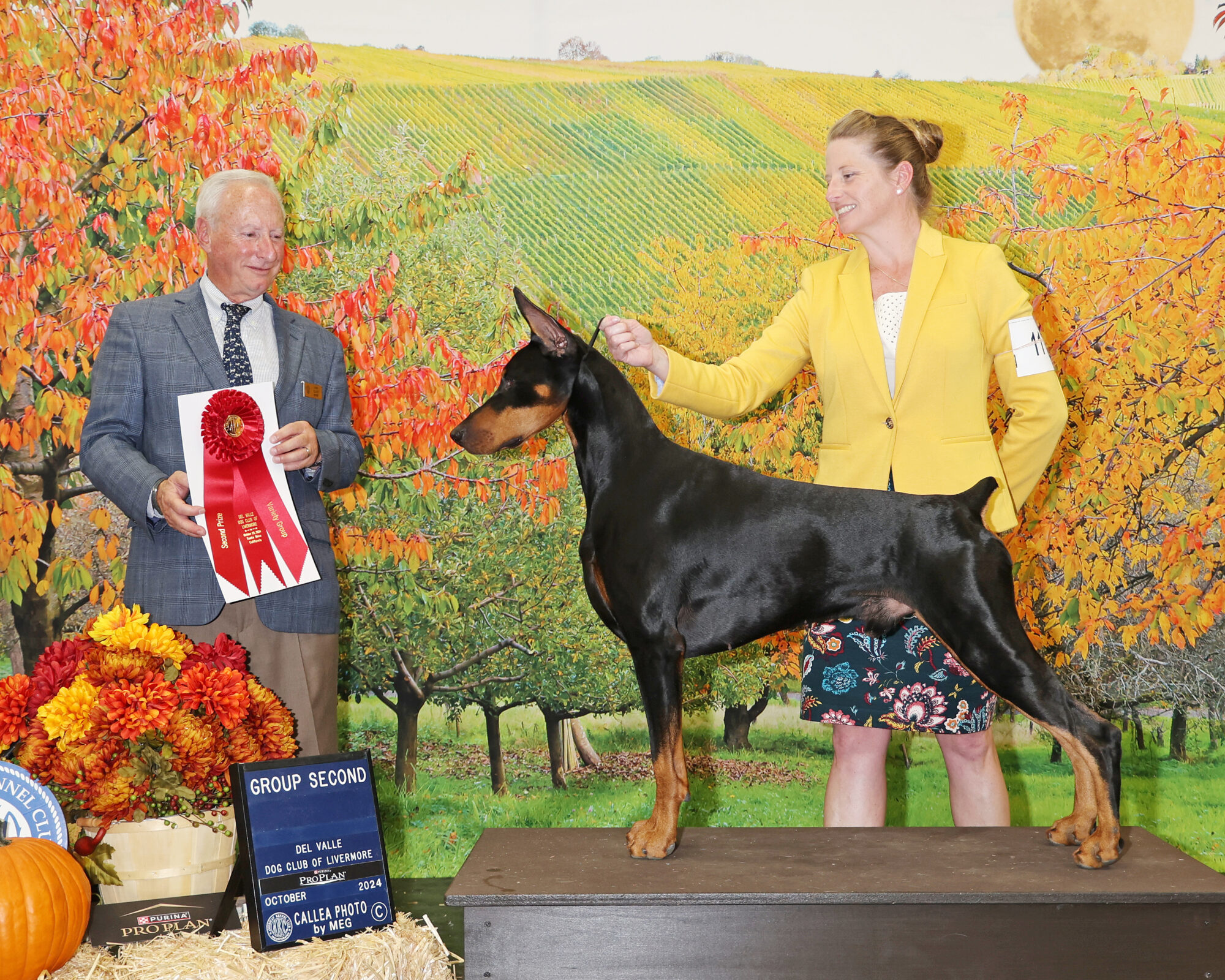
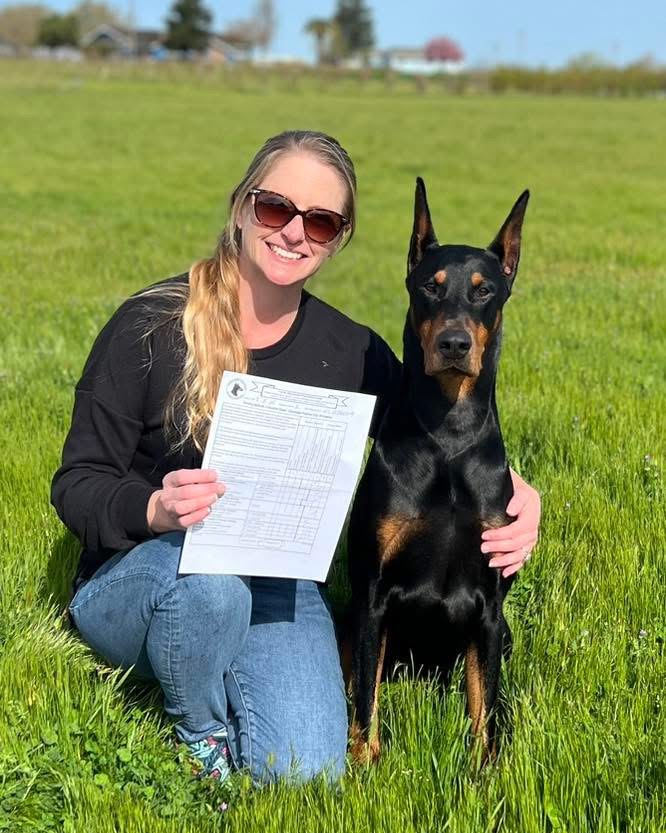
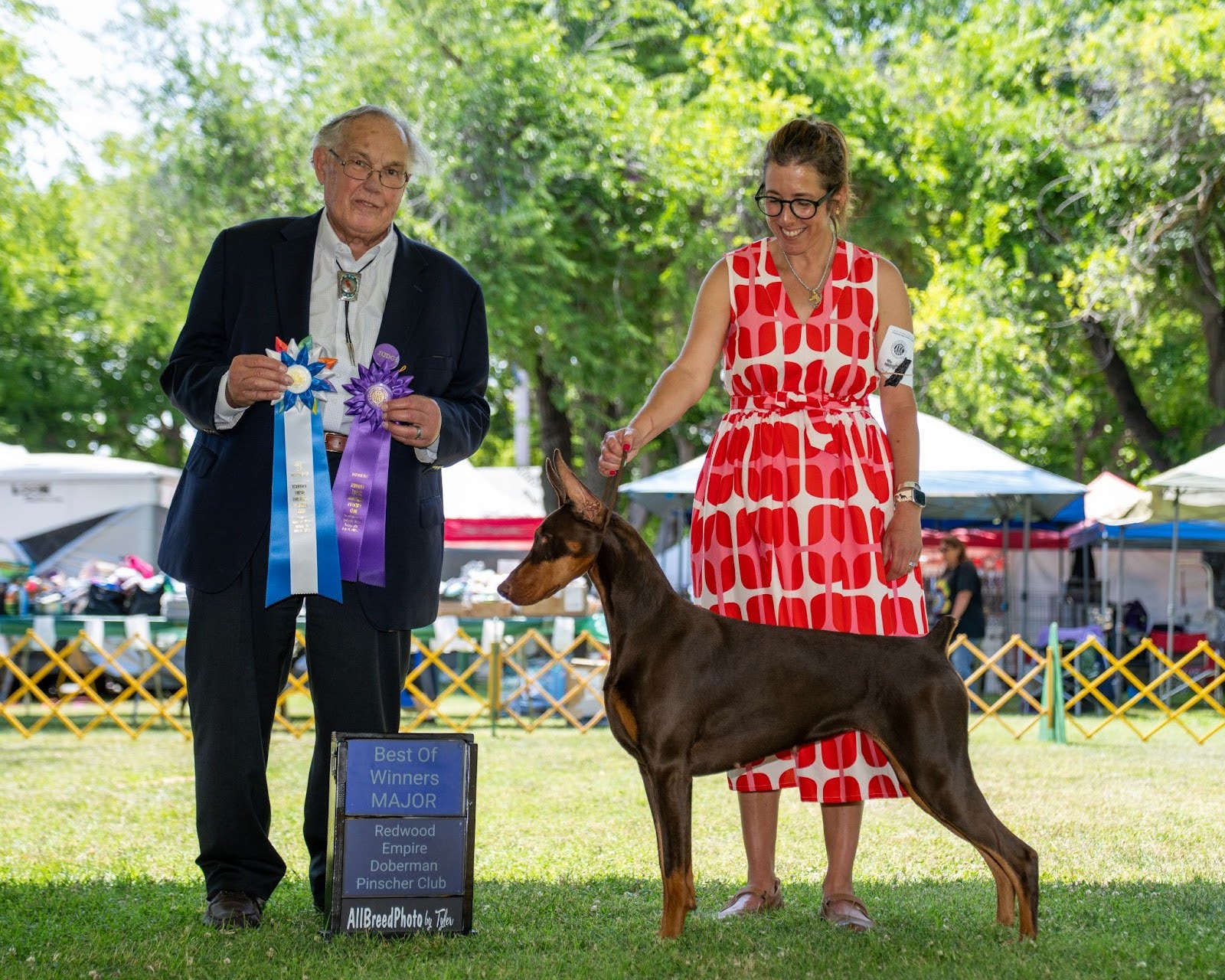
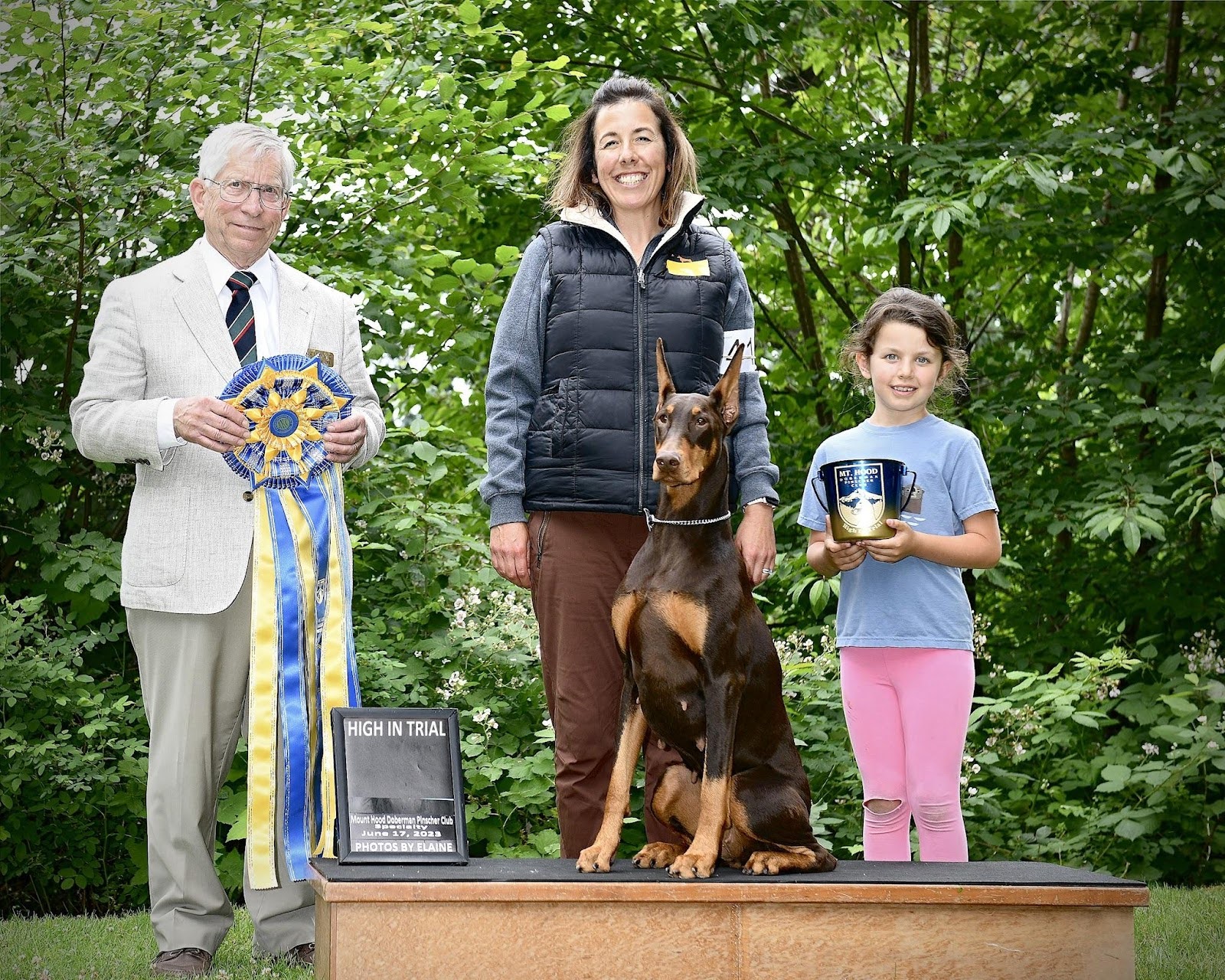
Kokopelli (and Kokopelli-adjacent) Doberman Pinschers in Action:
Local Doberman Pinscher Breeders:
What We Love About Doberman Pinschers:
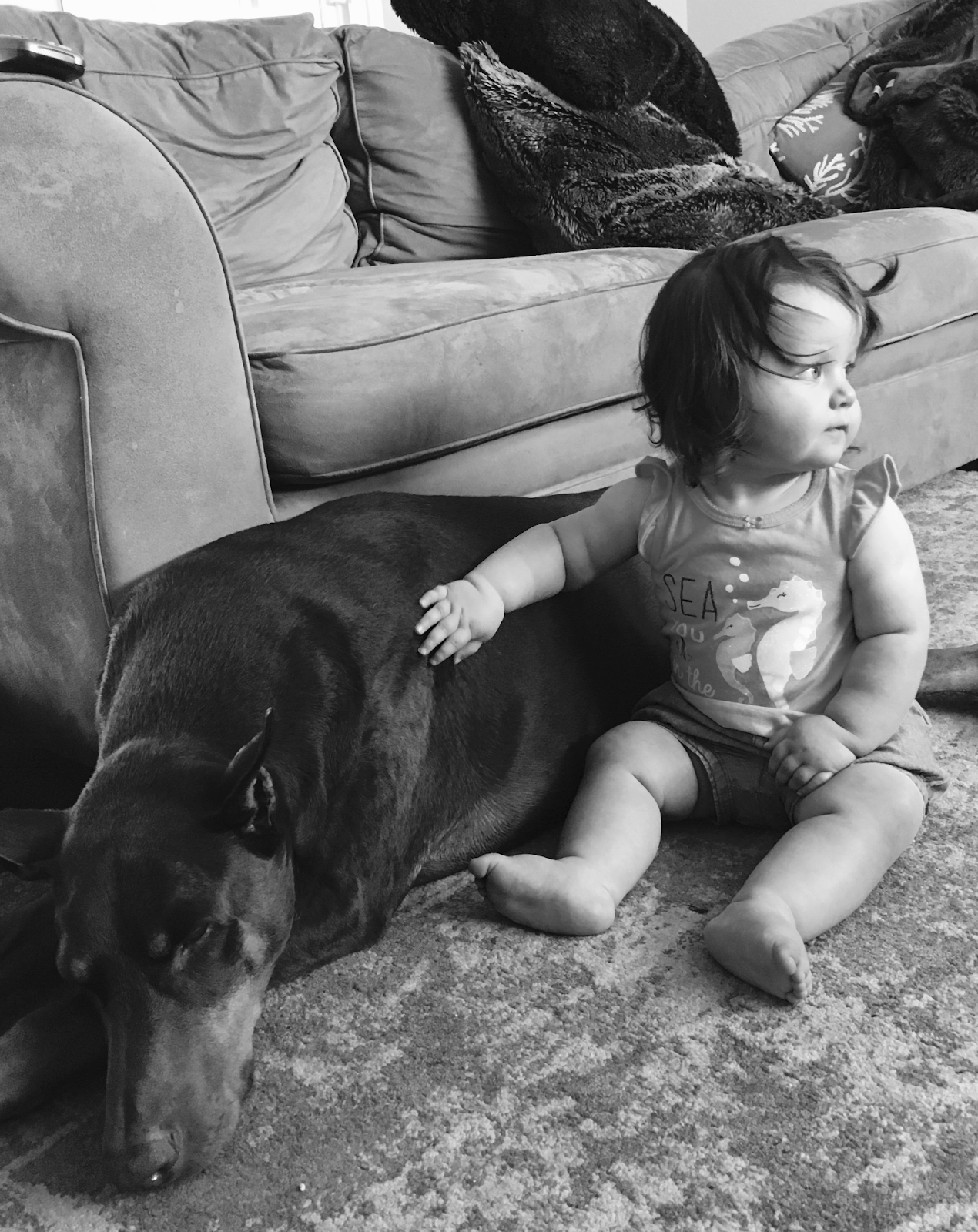
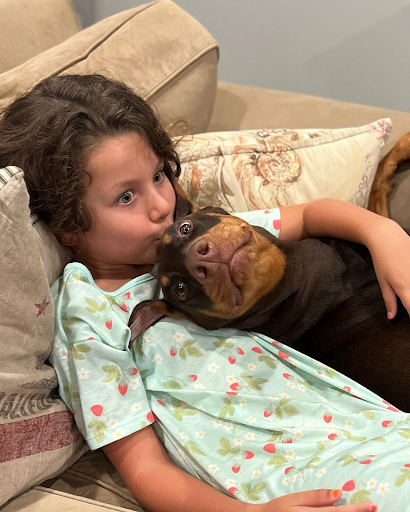
- They are a powerful yet elegant looking dog with an incredible presence. They are very in tune with their human companions and are thinkers. They are fiercely loyal and love a good cuddle session.
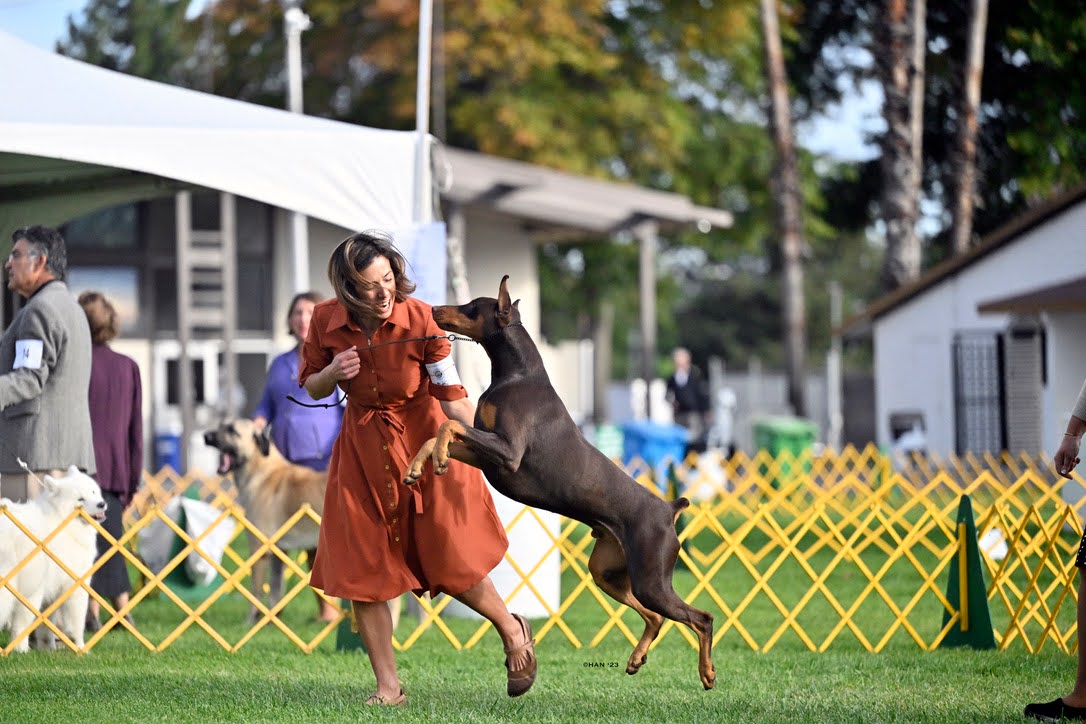
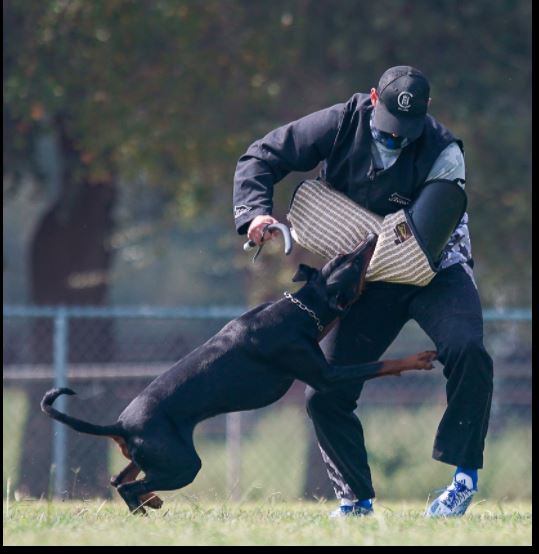
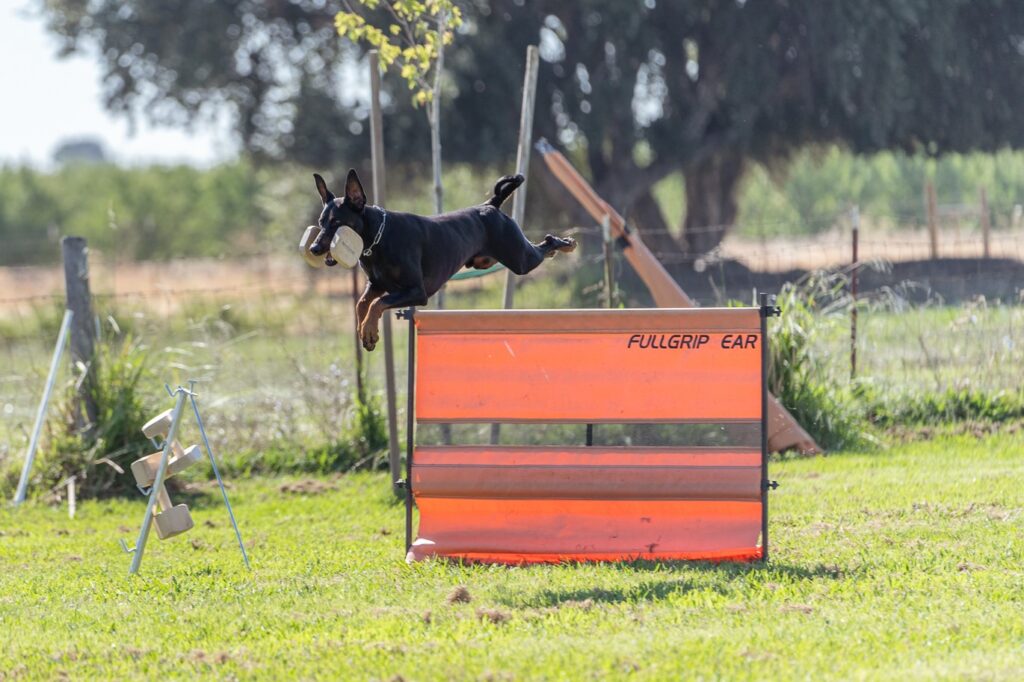
- They are active dogs and excel at many activities including: conformation showing, agility, rally, obedience, dock diving, air retrieve, barn hunt, scent work, fetch, lure coursing and trick dog/CGC.
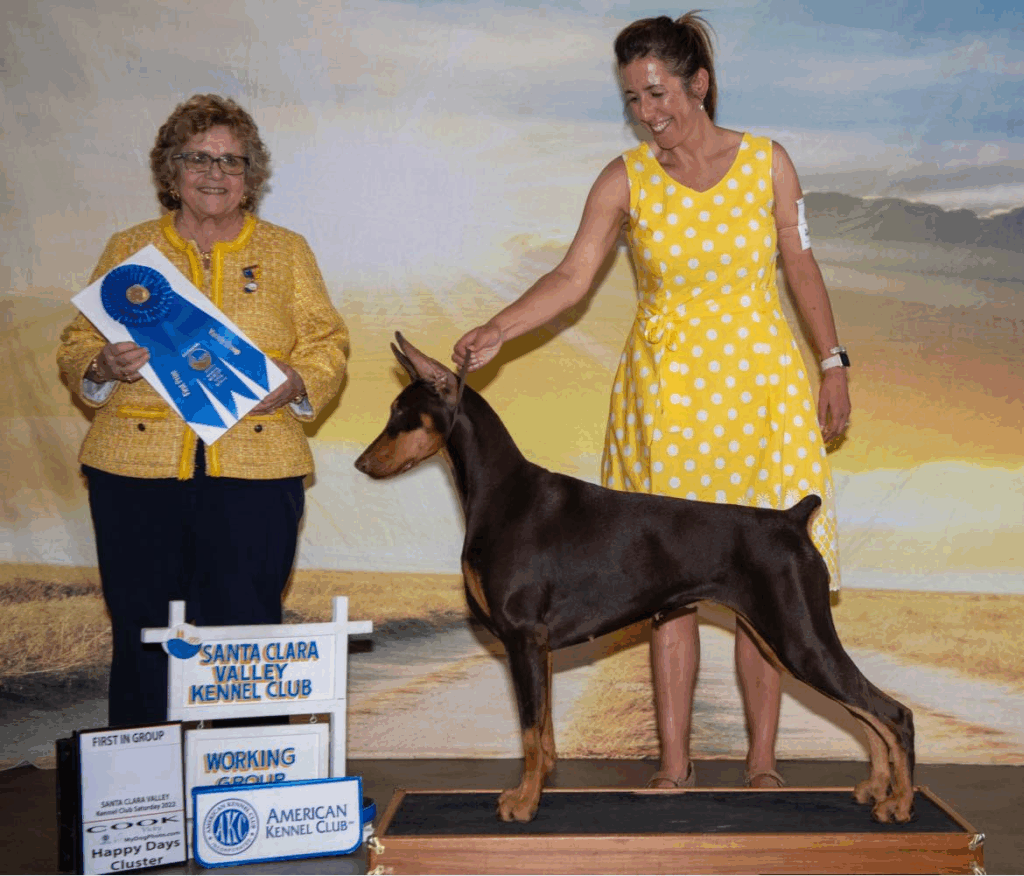
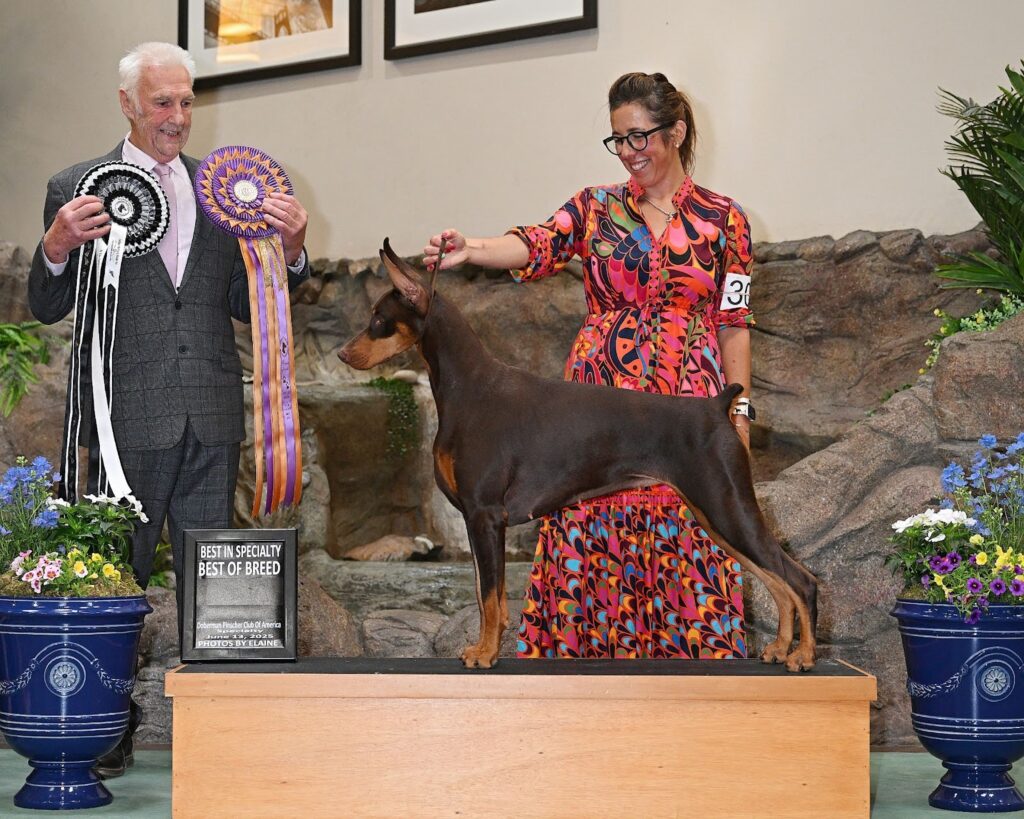
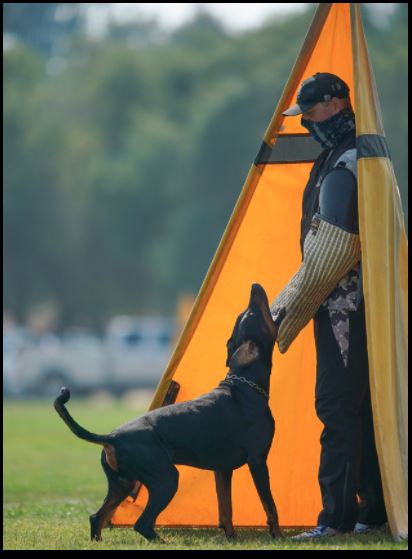
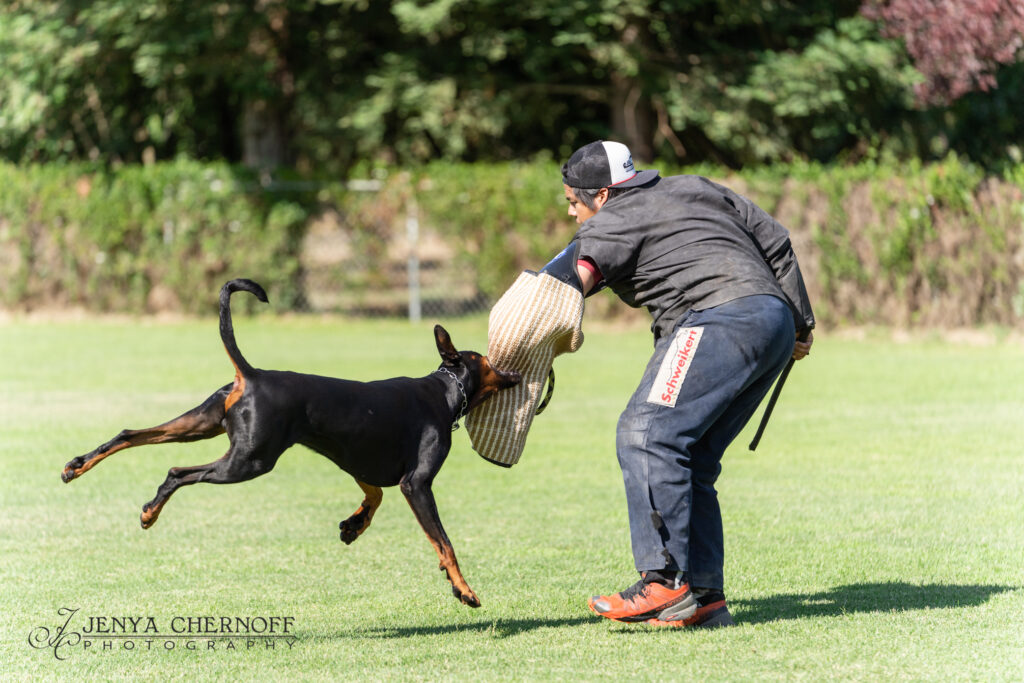
Dobermans are protective by nature and are great working dogs!
Be Aware of...
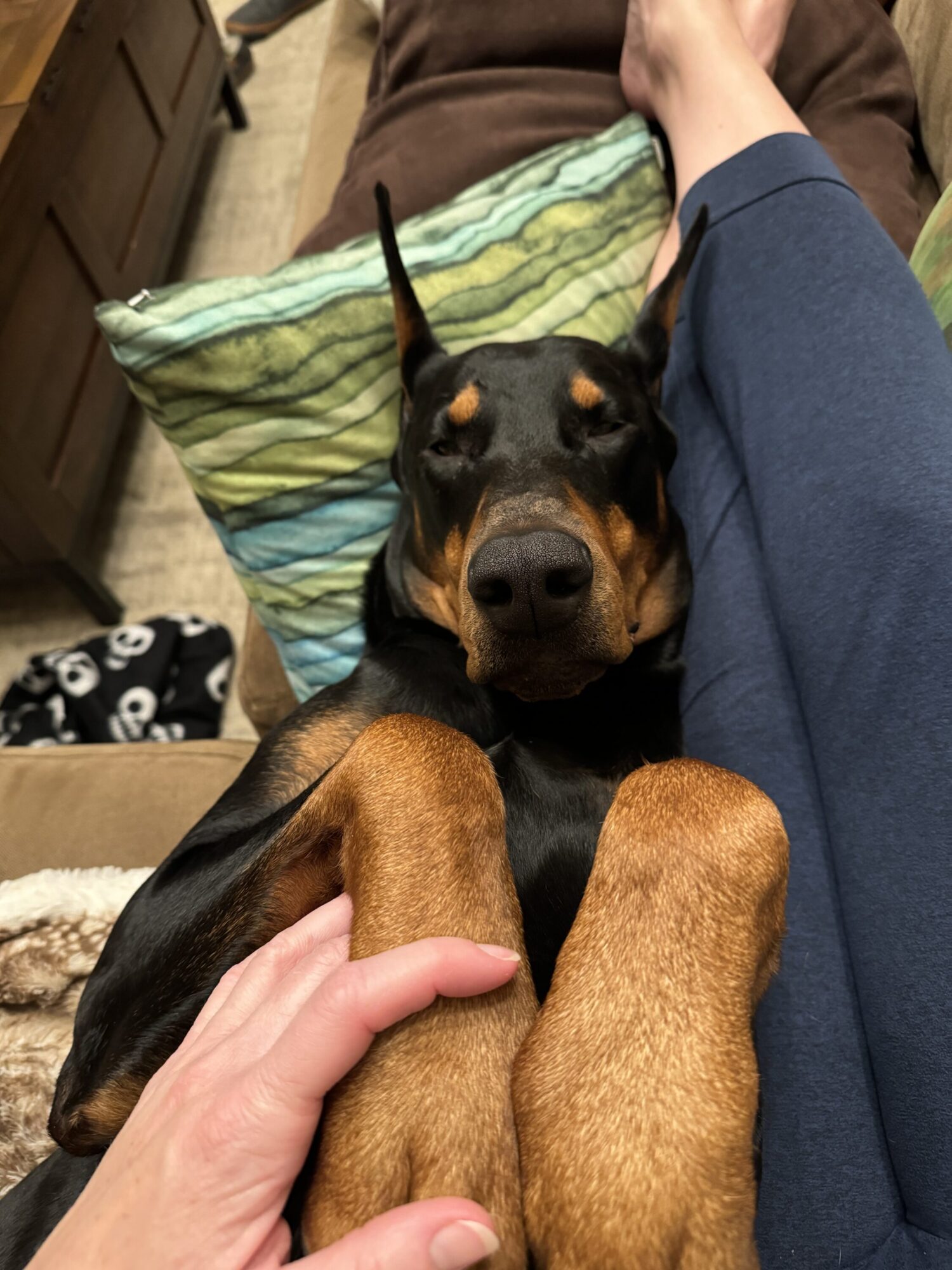
- Personality— Dobermans are not for everyone. They are absolutely manipulative, and need an owner smarter than they are. Because they are hard-wired to have deep bonds with their people, unknowing owners can inadvertently create a codependent Doberman; separation anxiety is not uncommon with first-time Doberman owners.
- Exercise— Dobermans are active and need regular exercise.
- Aggression— Dobermans were never bred to work with other dogs like many hound and herding breeds, and as such, dog aggression is not uncommon; this is not a dog park breed.
- Noise— These dogs are guard dogs at heart: they bark. And they bark with a big voice. Also…they are divas and will whine and whiiiiine when they don’t get what they want. Like a tea kettle.
- Shedding— Dobermans shed hairs that are hard, barbed, and dig into your clothes and skin.
- Stimulation— Dobermans are loud, they are demanding, physical, will encroach upon your personal space and need consistent training, and they need a job. The first two years with a Doberman are the most challenging--the majority of Dobermans being surrendered around 12-18 months due largely to lack of training and not enough exercise.
- Personality— Dobermans are not for everyone. They are absolutely manipulative, and need an owner smarter than they are. Because they are hard-wired to have deep bonds with their people, unknowing owners can inadvertently create a codependent Doberman; separation anxiety is not uncommon with first-time Doberman owners.
- Exercise— Dobermans are active and need regular exercise.
- Aggression— Dobermans were never bred to work with other dogs like many hound and herding breeds, and as such, dog aggression is not uncommon; this is not a dog park breed.
- Noise— These dogs are guard dogs at heart: they bark. And they bark with a big voice. Also…they are divas and will whine and whiiiiine when they don’t get what they want. Like a tea kettle.
- Shedding— Dobermans shed hairs that are hard, barbed, and dig into your clothes and skin.
Breed Health
Health Predispositions:
- Dobermans are predisposed to dilated cardiomyopathy (DCM), neck instability (cervical vertebral instability: CVI, Wobblers), hypothyroidism, liver disease (chronic active hepatitis: CAH) and von Willebrand's Disease (vWD). More can be found on the health statement from the Doberman Pinscher Club of America (DPCA).
- Like other deep-chested dogs, Dobermans are at increased risk of bloat from gastric dilatation and volvulus (GDV). Bloat is a painful emergency and, if not corrected in a timely manner, can be fatal. Many Doberman owners opt to have the stomach tacked to the body wall (gastropexy) to prevent it from twisting on itself. This procedure can be done using laparoscopy, which decreases the surgical incision length, blood loss, pain, and postoperative recovery time. Please call Kokopelli Veterinary Center if you have questions about this procedure or would like to schedule one for your Doberman.
- In addition to the diseases and diagnostic tests described here, the DPCA has a longevity registry and awards a longevity certificate (LC) to any Doberman living longer than 10 years. Any dogs whose parents both have LCs are given Bred for Longevity Certificates (BFL). Dogs from long-lived lineages are more likely to live longer themselves.
Health Clearances Recommended for Breeding a Doberman Pinscher (more on each of these below):
- Hip OFA: radiographs or PennHip testing performed by a veterinarian and submitted for evaluation to the OFA
- Cardiac OFA: performed by a board-certified veterinary cardiologist is recommended; minimally a general practicing vet can perform a cardiac auscultation.
- Ophthalmologist Companion Animal Eye Registry (CAER) OFA: performed by a board-certified veterinary ophthalmologist
- Thyroid OFA: blood draw taken by a veterinarian and sent to a participating lab with a completed submission form.
- Von Willebrand Disease: blood draw taken by a veterinarian and sent to a veterinary reference lab.
- Working Aptitude Test: seek out an event held by the Doberman Pinscher club in your area.
Spaying/Neutering Recommendations:
Kokopelli veterinarians are as concerned as any dog-lover about the overpopulation of unwanted dogs which results in euthanasia of so many healthy dogs every year. Our veterinarians, however, recognize that dogs belonging to responsible families, who keep their dogs on a leash or contained within fenced yards, are not contributing to this problem. Spaying or neutering these responsibly controlled dogs does nothing to decrease the surplus population of stray dogs. When we counsel responsible dog owners about spaying and neutering, our advice is focused on health and behavioral concerns related to reproductive status (whether a dog is spayed, neutered, or intact). Various options exist beyond the traditional spay or neuter procedure, including vasectomy or Suprelorin implants for males (or just leaving them intact), and ovary-sparing spays or laparoscopic spays for females. We encourage you to investigate the hyperlinks provided here, and to reach out to our clinic for a consult if you would like to discuss your specific questions about your canine companions.
Future Owner Tips
Kokopelli Support for Breeders:
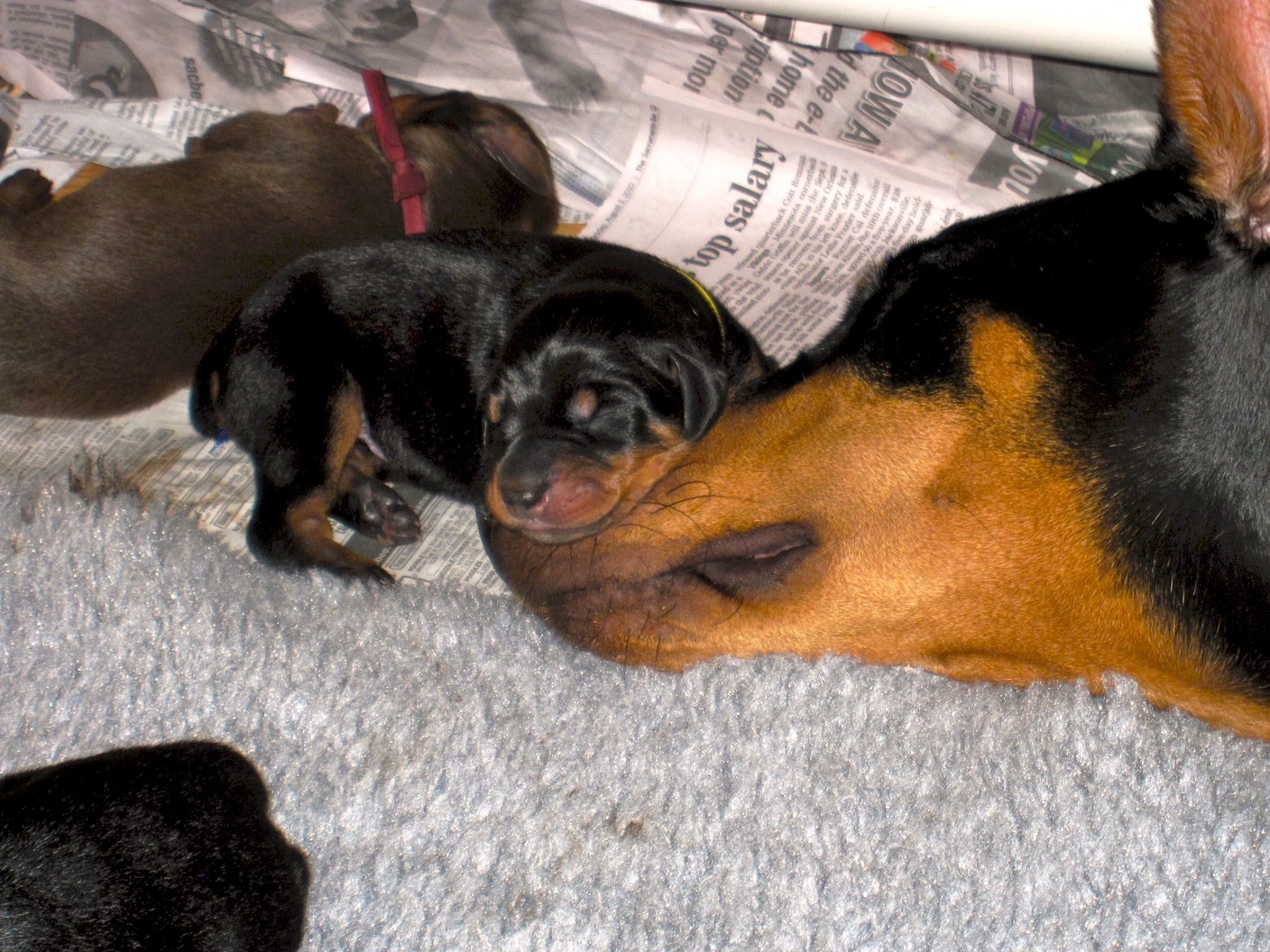
The mission of Kokopelli Assisted Reproductive Services at Kokopelli Veterinary Center is to fully support responsible breeders in creating the healthiest puppies possible. Part of that mission is advising breeders in health testing and advising potential puppy buyers in what they should be considering when looking at adopting a puppy.
Temperament:
One of the absolute joys of working with Kokopelli breeders is the wonderful temperament of the majority of the dogs we see. We can usually tell within seconds of entering a room if the dog is trained as a show dog or in some specific competition by the way their dog behaves towards us. Dogs who belong to people who show, train, or otherwise compete have confidence and are not afraid of strangers. They know how to listen to their owners and behave appropriately. Different breeds are expected to have different temperaments, but no dog of any breed is intended to be fearful or aggressive in non-threatening circumstances. Temperament is partly determined by genetics and partly by socialization and training. A good breeder will consider proper temperament as equally important as good physical health. An excellent breeder will practice appropriate socialization of puppies from day one and then each and every day until that puppy joins their forever family. At that point, it is imperative that the new family take over proper socialization and training.What to Ask the Breeder if You are Considering Bringing a Doberman Pinscher into Your Home:
The top goal of every responsible breeder is not to make money on a litter, but to produce the healthiest puppies possible. Dedicated, responsible breeders are passionate about their breed and want to contribute to the continuation of their breed by placing healthy puppies into caring homes. As such, responsible breeders will only breed dogs with the appropriate temperaments and who have also been tested for diseases of concern for their specific breed. The sire and dam of your prospective puppy should have been tested minimally for hip dysplasia, heart conditions, eye conditions, thyroid disease, and von Willebrand Disease (see health clearance section on each of these below) and those records should be available to you. Ideally breeders will also be performing other appropriate health clearances (also described below). You can use the list below to have an informed conversation with the breeder of your prospective puppy to try to make it as likely as possible that you will be adopting as healthy a Doberman Pinscher as possible, or that at least you are aware of the potential health risks and challenges your new puppy may face.Breed Health Certifications:
Responsible breeders go to great effort and expense to ensure that the puppies they produce are as healthy as possible. They know that the puppies they produce reflect back on them; their kennel’s reputation among their peers means more than the fast buck they can get selling puppies produced by cutting corners. Responsible breeders first and foremost love their breed and their goal is to improve the health of the breed through responsible decisions on who and how they breed. A large part of this effort is done by conducting health testing on potential breeding dogs and bitches and then using that information, along with considerations of conformation, temperament, genetic relatedness, and other factors in choosing the best matches for breeding. The following is a list of health testing that can or should be done in Doberman Pinschers prior to making a breeding decision:
- Von Willebrand disease: An important clotting factor in dog blood is von Willebrand factor (vWf). A genetic mutation causes some dogs to have a reduced amount of vWf, causing a decrease in their blood’s ability to clot. Clinical signs include frequent bruising, nose bleeds, prolonged bleeding from minor injuries or during or after surgical procedures. The disease is inherited as an autosomal recessive trait. This means that a dog must have two copies of the mutated gene to be affected and have the disease. Affected dogs should never be bred. The trait shows variable expressivity, which means that each individual has a variable degree of severity of the disease. Some affected dogs have only slightly slower clotting times and other affected dogs have trouble clotting at all. If a dog has only one copy of the mutated gene, it is considered a carrier only and will not express the disease. A carrier dog may still be bred, but only to a mate who is not a carrier, i.e., a dog that is clear of the affected gene. Genetic tests can easily be done at multiple veterinary genetics labs around the country. Von Willebrand clearances are required by the DPCA. Clinicians at Kokopelli Veterinary Center can help you understand how to submit genetic samples and interpret results.
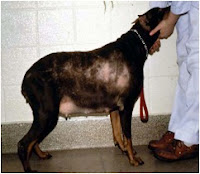
- Thyroid OFA: Hypothyroidism is a condition where the thyroid gland does not produce enough of the hormone thyroxine. This has negative effects on the metabolism and dogs tend to gain weight, even if food intake does not increase. They may also suffer from hair loss and skin conditions. The condition is easy to diagnose with a blood panel and is easily treated with thyroid supplements. The condition usually manifests later in life, but can start at any time. General recommendations are to test annually until 4 years of age, and then every 2 years after that. At Kokopelli Veterinary Center, for medical cases, we generally recommend screening for free T4 hormone first. If that is low, then we recommend a full thyroid panel sent to Michigan State University. For the thyroid OFA certification, a full panel must be submitted to MSU.
- Cardiac OFA evaluation: This exam must be performed on dogs at least 12 months of age by a board-certified veterinary cardiologist. Using doppler ultrasound, the cardiologist thoroughly evaluates the anatomy and function of the heart. Two basic tiers of heart disease clearance are evaluated: congenital and adult-onset diseases. Congenital disorders are present at birth and are detectable anytime the dog is examined. Once a dog has been cleared for congenital disorders, that clearance is good forever. In addition to the echocardiogram performed with ultrasound by a cardiologist, it is also recommended that Dobermans have a Holter monitor evaluation, which is a device that they wear for 24 hours which monitors the heart via electrocardiogram (ECG). The DPCA strongly recommends all breeding dogs have cardiac health clearances. Cardiac OFA examinations are performed at Kokopelli Veterinary Center a few times every year. Please contact our front desk to make an appointment for your dog.
- Companion Animal Eye Registry (CAER): Eye diseases are often progressive and some are not detectable until a dog ages. It is recommended that breeding dogs have annual CAER examinations, which must be performed by a board-certified ophthalmologist. The DPCA recommends eye clearances for breeding Dobermans. Eye disease OFA clinics are held a few times a year at Kokopelli Veterinary Center. Please call our front desk to schedule your dogs for our next clinic.
- Working Aptitude Evaluation (WAE): It may seem strange to include this in “health testing,” but having the right temperament is absolutely essential from a mental health perspective for a Doberman Pinscher. The DPCA has a temperament test for Dobermans with defined parameters and elements. It is essentially an obstacle course that includes walking on a strange substrate (plastic tarp) and passing “scary” obstacles including a rapidly opening umbrella, someone shooting blanks from a pistol into the air, a friendly stranger approaching, and a threatening/weird stranger. The dog must exhibit confidence and courage consistent with the traits quoted in the breed standard in the face of these challenges to pass the exam and be certified with a Working Aptitude Certificate (WAC). It may seem strange to recommend this for breeding animals, since genetics only partially contributes to temperament. The learned component of confidence, however, is hugely influenced by the first 4 months of life in puppyhood. Breeders are responsible for BOTH nature (genetics) and (early) nurture; dogs exhibiting fear and lack of confidence are a reflection on the kennel, since the temperament of an adult dog is the product of genetics, early socialization, and subsequent training. Doberman owners interested in WAE should contact their local Doberman club for more information on upcoming certification events.
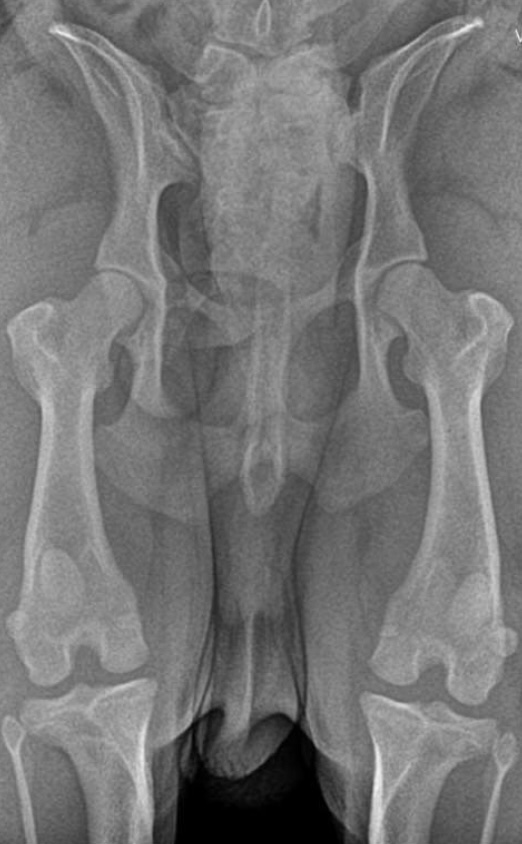
- Hip dysplasia is an orthopedic condition that can be debilitating for dogs by making every step they take painful and difficult. The conditions are caused because the bones of the hip or elbow joints are not formed and seated appropriately. Eventually they wear away at the cartilage and bone will rub on bone, which is painful. Signs that a dog will eventually become dysplastic can be detected early in life through radiographs (x-rays). Two testing options exist for hip dysplasia for Dobermans: Hip dysplasia OFA and PennHIP, both of which are available by appointment at Kokopelli Veterinary Center. Since the predilection for hip dysplasia is genetic, breeding affected dogs together increases the risk that the resultant puppies will have bad hips, often necessitating expensive and difficult surgical corrections at some point in their lives. It is recommended that dogs with poor conformation not be bred and dogs with moderate changes be bred to dogs with excellent joints. OFA testing for hips can be done in dogs that are 24 months of age. PennHip can be performed in dogs as young as 16 weeks. Sedation is strongly recommended for all OFA testing and required for PennHIP. The DPCA recommends all breeding dogs have hip health clearances. Please call our front desk to schedule an appointment.
Links for Further Information:
View our educational webinar series and learn more about how to raise healthy animals.
Please reach out to us for any questions or help. Nothing makes us happier than helping create situations where the human/animal bond can flourish.
Schedule your pet’s consultation today.